All published articles of this journal are available on ScienceDirect.

Utilization of Eggshell Powder in Cement Mortars: Enhancing Mechanical and Thermal Properties for Sustainable Construction

Abstract
Introduction
This study investigates eggshell powder (ESP) as a partial cement replacement in mortar, with an emphasis on its thermal behavior, passive indoor temperature regulation, and synergistic interactions with multiple supplementary cementitious materials - namely fly ash (FA), silica fume (SF), and blast furnace slag (BFS). The effects of ESP on shear strength are also examined, as they remain sparsely documented in existing literature. Distinctively, this research implements a large-scale screening of 60 mix designs (360 specimens) to maximize cement reduction while maintaining or improving mechanical performance relative to the control.
Methods
Mortars with ESP at 0, 10, 15, and 20 wt.% were tested for flow (EN 1015-3) and for flexural and compressive strengths at 7 and 28 days (EN 196-1). Shear strength at 28 days was measured using the Z-push-off method. Blended (ternary and quaternary) mixes replaced 30 wt.% of cement through combinations of ESP, FA, SF, and BFS. Thermal behavior was monitored using chambers (7 × 15 × 15 cm; wall thickness = 4 cm) made with 0, 15, 30, and 50 wt.% ESP over 30 days, with temperature readings taken at 09:00, 12:00, 15:00, 19:00, and 00:00 via type-K thermocouples. Results are summarized as average values.
Results
Workability decreased beyond 15 wt.% ESP. The best blended mix (70% cement, 10% ESP, 10% FA, 5% SF, 5% BFS) achieved +12% higher 28-day compressive strength and +17.1% higher 28-day flexural strength compared to the control; the 10 wt.% ESP mix reached +28% higher shear strength at 28 days. ESP-modified mixes exhibited an improved passive thermal response, with peak internal temperature reductions of up to ≈ 7°C during hot periods (≈ 12:00–15:00) and comparable or slightly higher internal temperatures during cooler periods.
Discussion
Moderate ESP dosages (≈ 5–10 wt.%) can enhance mechanical performance when combined with FA, SF, and BFS, likely through filler densification and nucleation effects in addition to limited pozzolanic activity. Thermal monitoring indicates that ESP contributes to improved passive regulation under variable ambient conditions. However, the practicality of higher ESP levels (> 15 wt.%) decreases due to increased water demand and reduced workability.
Conclusion
Within SCM-blended systems, ESP provides a cost-effective and eco-efficient approach to cement reduction while maintaining or even enhancing mechanical strength and thermal comfort. However, the findings are limited to laboratory-scale and short-term curing conditions (7–28 days). Therefore, future research should extend to long-term durability assessments - such as freeze–thaw resistance, chloride ion penetration, and sulfate attack - along with microstructural validations (SEM, XRD, TGA), building-scale thermal analyses, and techno-economic evaluations to establish the practical feasibility of ESP-modified mortars for sustainable construction applications.
1. INTRODUCTION
Sustainable construction aims to minimize the environmental footprint of buildings throughout their life cycle by reducing energy consumption, emissions, and resource use. In this context, the partial replacement of cement with recycled or renewable materials has become a key strategy to lower CO 2 emissions associated with the construction industry.
Over the past decade, numerous agricultural and industrial by-products - such as rice husk ash, palm oil fuel ash, wood ash, and oyster shell powder - have been investigated as partial cement substitutes due to their pozzolanic reactivity and contribution to waste valorization [1-5]. Among these, eggshell powder (ESP) has emerged as a particularly promising alternative because of its high calcium carbonate content and wide availability as food-industry waste, making it both environmentally and economically attractive for sustainable cementitious composites [6].
Concrete underpins economic and social development worldwide, yet rising demand has amplified its environmental burden mainly through cement production. From 2005 to 2020, global cement output increased from 2.3 to 3.5 billion tons (≈ 2.5%/year), and projections for 2050 indicate 3.7–4.4 billion tons [7]. Cement manufacturing is energy-intensive, depletes natural resources, and emits substantial CO2, contributing to climate change. It releases approximately 1.35 billion tons of greenhouse gases annually [8,9]. With the construction sector responsible for about 36% of global energy use and 39% of total CO2 emissions, partial cement replacement strategies are urgently needed to lower the footprint of cementitious composites [10].
Among potential solutions, eggshells - a common agricultural waste - offer a promising route. Eggshells constitute approximately 10% of an egg’s weight and are primarily CaCO3, a key component relevant to cement systems [11, 12]. Global egg production yields more than 8 million tons of eggshell waste annually; if not properly managed, this waste can cause environmental pollution, odor issues, and allergic reactions [11, 12]. Utilizing eggshell powder (ESP) as a partial cement replacement therefore provides a dual benefit: it alleviates the environmental burden of eggshell waste while advancing sustainability in construction materials.
Prior studies indicate that eggshell powder (ESP) is a viable, sustainable substitute in cementitious systems. As a bio-waste, eggshells are linked to environmental concerns yet can also act as potential adsorbents for heavy metals, helping mitigate pollution [ 13]. ESP is characterized by high CaCO 3 content and low concentrations of deleterious ions (e.g., chloride) that could impair durability [ 14], which makes it a promising alternative to limestone powder in cement production [15].
Incorporating ESP can conserve natural resources, reduce greenhouse gas emissions, and lessen the environmental burden of bio-solid waste [16–21]. ESP also lacks harmful chemical constituents that would adversely affect concrete properties [20, 22, 23]. Numerous studies report mechanical improvements - compressive, tensile, and flexural - at optimal dosages typically around 5–15 wt.% [1, 22, 24–30], while higher replacement levels may reduce strength [1, 19, 31, 32]. Mechanistically, ESP can refine pore structure via micro-filler effects and hydration-related reactions during curing, thereby contributing to enhanced durability [33–35] (the precise optimum can depend on particle-size distribution, curing regime, and co-use with SCMs [36]).
The flexural strength of ESP-modified concretes has also been widely investigated [8, 16, 18, 37, 38]. For instance, 5% ESP combined with 10% microsilica yielded flexural strengths comparable to the control [31], whereas higher ESP dosages generally reduced flexural performance [39–41]. Conversely, some studies reported up to 22.9% gains when ESP acted primarily as a filler at contents up to 20%, and approximately 7.5% ESP has been identified as an optimum level for peak flexural strength in certain mixtures [42–45]. These findings indicate that flexural response is dosage- and system-dependent, influenced by particle-size distribution, curing regime, and co-use with SCMs.
Despite notable progress, clear gaps remain in the literature. Most studies focus on short-term mechanical responses, while long-term behavior under sulfate, chloride, and acid attack - as well as freeze–thaw and wet–dry cycling - has not been sufficiently investigated [ 19]. Evidence on the thermal characteristics of ESP, including its potential contribution to passive indoor temperature regulation, also remains limited, and data on building-scale energy impacts and scale-up are scarce.
This study directly targets these gaps by evaluating the compressive, flexural, and shear strengths of ESP-based mortars across multiple replacement levels; by examining thermal response under repeated daily cycles relevant to indoor comfort and operational energy; and by systematically mapping multi-SCM interactions [46] in ternary and quaternary blends of ESP with fly ash (FA), silica fume (SF), and blast furnace slag (BFS) [5, 47]. To that end, we conducted a large-scale screening of 60 mixes (360 specimens) explicitly aimed at maximizing cement reduction without compromising strength, discussed environmental and practical considerations, and identified detailed techno-economic validation as a direction for future work. By integrating mechanical, thermal, and shear performance with multi-SCM effects, this approach provides decision-ready evidence for sustainable mortar formulation and helps frame priorities for durability and scale-up studies.
2. MATERIALS AND METHODS
2.1. Materials Used In Research
The primary materials used for producing cement-mortar specimens in this study were Portland cement, sand, water, eggshell powder (ESP), fly ash (FA), silica fume (SF), and blast furnace slag (BFS). The characteristics and preparation procedures of these materials are summarized below.
A general-purpose Portland cement (CEM I 42.5 R) was used in this study. The cement conformed to TS EN 197-1 standards, with a specific gravity of 3.15 g/cm3 and a specific surface area of 3350 cm2/g. The physical and mechanical properties of the Portland cement are presented in Table 1, and these data were obtained from the manufacturer’s technical datasheet. Likewise, the chemical compositions listed in Table 2 for cement, fly ash, blast furnace slag, and silica fume were primarily derived from manufacturer-provided documentation.
| Density (g/cm3) | 3.15 | Specific surface – Blaine (cm2/g) | 3350 |
| Setting time start (min) | 150 | Compressive strength (2 days) (MPa) | 28.6 |
| Setting time finish (min) | 190 | Compressive strength (28 days) (MPa) | 55.8 |
| Volume expansion (Le Chatelier) (mm) | 1 | - | - |
C Class F fly ash, sourced from local suppliers, and blast furnace slag (BFS) obtained from the Ereğli Iron and Steel Factory in Zonguldak, Türkiye, were used in the mixtures. Silica fume (SF) was procured from the Antalya–Etibank Ferro-Chromium Factory. The silica fume had a specific gravity of 2.32 g/cm3 and a unit weight of 245 kg/m3. The chemical compositions of the cement, fly ash, blast furnace slag, silica fume, and eggshell powder (ESP) are presented in Table 2.
Natural sand was used in the mixtures. The sand was thoroughly washed to remove impurities and sieved to obtain a suitable particle-size distribution for cement-mortar applications. The particle-size distribution of the sand is presented in Table 3, confirming that the material is well-graded and suitable for use in the mixtures. Tap water maintained at 23 ± 2°C was used for mixing and curing the specimens.
The eggshell powder (ESP) used in this study was supplied by a certified agricultural manufacturer (Agrobera®, Türkiye), which produces feed additives and agricultural-grade calcium supplements from eggshell waste. The supplier ensures full traceability under national feed additive regulations through registration code YK-TR-4200434. The raw eggshells were collected from local bakeries and food industries under controlled conditions to avoid contamination.
Before processing, all shells were thoroughly washed with clean tap water to remove impurities and organic residues, followed by air-drying under sunlight for approximately 24 hours. Subsequently, the shells were oven-dried at 120°C for 24 hours to ensure complete moisture removal.
The drying temperature of 120°C was selected to eliminate residual moisture and organic matter without initiating thermal decomposition of CaCO3. Similar non-calcined ESP preparation methods (drying at 105–120°C for 24 h) have been reported in previous studies [31,40]. This approach preserves the natural CaCO3 structure of the eggshells, allowing them to function primarily as a bio-filler rather than a pozzolanic additive.
After drying, the material was ground using a mechanical grinder and sieved to achieve a particle size range of 60–90 μm, comparable to cement fineness. Blackened or visibly contaminated shells were removed prior to grinding to ensure uniformity. The physical and chemical characteristics of the Agrobera® ESP were verified through manufacturer analysis, indicating a calcium content of approximately 35.4%, magnesium content of 2619.7 mg/kg, moisture content of 1.42%, and no detectable pathogenic microorganisms (E. coli < 10 kob/g; Salmonella spp., negative). The powder’s color ranged from white to light beige, consistent with the supplier’s specifications for agricultural-grade calcium material.
These procedures ensured both the consistency and traceability of the ESP used throughout the experimental program.
A polycarboxylate ether-based superplasticizer (Melflux 2651 F, BASF) was employed in all mortar mixtures to enhance flowability without increasing water content. The admixture was used at a fixed dosage of 0.5% by weight of the total binder (cement + ESP). Melflux 2651 F was chosen for its high dispersing efficiency and compatibility with calcium carbonate-rich systems such as ESP. The superplasticizer was dissolved in the mixing water prior to blending with dry materials to ensure homogeneous distribution.
| Chemical Component |
Cement CEM I 42.5 R |
Fly Ash (F Class) |
Blast Furnace Slag (BFS) |
Silica Fume (SF) |
Eggshell Powder (ESP) |
|---|---|---|---|---|---|
| SiO2 | 20.63 | 58.58 | 41.49 | 85.98 | 0.59 |
| Al2O3 | 4.71 | 23.40 | 16.34 | 0.64 | 0.15 |
| Fe2O3 | 3.41 | 6.97 | 0.61 | 0.32 | 0.04 |
| CaO | 63.64 | 1.55 | 29.26 | 0.7 | 51.40 |
| MgO | 1.24 | 2.76 | 7.68 | 4.9 | 0.54 |
| SO3 | 2.98 | 0.45 | 1.90 | 0.63 | 0.81 |
| Cl- | 0.04 | 0.03 | 0.01 | - | 0.09 |
| Na2O | 0.23 | 0.46 | 0.80 | - | 0.44 |
| K2O | 0.91 | 4.11 | 1.10 | - | 0.09 |
| Particle Size, mm | 4 | 2 | 1 | 0.5 | 0.25 |
|---|---|---|---|---|---|
| % fine | 100.0 | 99 | 99 | 98 | 62 |
2.2. Experimental Work
The mortar mixtures were prepared in accordance with EN 196-1. A constant water-to-binder ratio (w/b) of 0.50 and a sand-to-binder ratio of 3:1 were maintained for all mixtures. Eggshell powder (ESP) was used as a partial replacement of cement by weight at levels of 0%, 10%, 15%, and 20%. The exact proportions of cement, ESP, sand, water, and superplasticizer are presented in Table 4 .
All dry materials were first mixed for 2 minutes, followed by the gradual addition of mixing water containing the dissolved superplasticizer. Mixing was continued for an additional 3 minutes to achieve uniform consistency. Workability was evaluated using the flow table test (EN 196-1), and the target flow value was maintained at 110 ± 5% for all mixtures to ensure comparable fresh-state properties between the control and ESP-modified mortars.
| Sample # |
Eggshell Powder % |
Silica Fume % |
Fly Ash % |
Blast Furnace Slag % |
Flow Table Test (Cm) |
7-Day Flexural Strength (MPa) |
7-Day Compressive Strength (MPa) |
28-Day Flexural Strength (MPa) |
28-Day Compressive Strength (MPa) |
|---|---|---|---|---|---|---|---|---|---|
| 1 | 0 | 0 | 0 | 0 | 14,1 | 4,68 | 15,24 | 5,02 | 18,21 |
| 2 | 5 | 0 | 0 | 0 | 14,7 | 4,38 | 14,68 | 6,21 | 18,92 |
| 3 | 10 | 0 | 0 | 0 | 14,5 | 4,29 | 15,47 | 6,78 | 20,64 |
| 4 | 15 | 0 | 0 | 0 | 13,8 | 3,57 | 11,87 | 4,68 | 15,67 |
| 5 | 20 | 0 | 0 | 0 | 13,5 | 2,98 | 9,69 | 4,09 | 12,43 |
| 6 | 0 | 0 | 0 | 0 | 14,4 | 4,96 | 17,99 | 5,67 | 19,99 |
| 7 | 0 | 0 | 5 | 0 | 14,6 | 5,15 | 17,45 | 5,78 | 22,04 |
| 8 | 0 | 0 | 10 | 0 | 14,9 | 4,47 | 13,79 | 5,28 | 17,12 |
| 9 | 0 | 0 | 15 | 0 | 15,1 | 3,83 | 10,69 | 4,32 | 13,42 |
| 10 | 0 | 0 | 20 | 0 | 15,8 | 3,47 | 10,73 | 3,74 | 12,75 |
| 11 | 0 | 0 | 0 | 0 | 14,3 | 5,12 | 17,79 | 6,20 | 20,60 |
| 12 | 0 | 2 | 0 | 0 | 14,6 | 4,11 | 17,43 | 5,92 | 21,16 |
| 13 | 0 | 5 | 0 | 0 | 15,1 | 4,49 | 20,36 | 5,57 | 22,12 |
| 14 | 0 | 8 | 0 | 0 | 14,7 | 4,15 | 15,66 | 5,45 | 19,87 |
| 15 | 0 | 10 | 0 | 0 | 13,9 | 4,92 | 15,63 | 6,04 | 19,98 |
| 16 | 0 | 0 | 0 | 0 | 14,1 | 4,72 | 18,01 | 6,68 | 19,34 |
| 17 | 0 | 0 | 0 | 5 | 14,5 | 5,53 | 20,82 | 7,50 | 22,19 |
| 18 | 0 | 0 | 0 | 10 | 14,9 | 5,42 | 20,77 | 7,73 | 22,37 |
| 19 | 0 | 0 | 0 | 15 | 15,6 | 4,73 | 17,56 | 6,02 | 20,38 |
| 20 | 0 | 0 | 0 | 20 | 16,4 | 4,12 | 11,52 | 5,95 | 17,69 |
| 21 | 5 | 0 | 5 | 0 | 14,1 | 5,03 | 17,91 | 6,82 | 21,22 |
| 22 | 5 | 0 | 10 | 0 | 14,8 | 4,07 | 13,40 | 6,10 | 17,43 |
| 23 | 10 | 0 | 5 | 0 | 14,3 | 4,89 | 14,62 | 6,65 | 20,95 |
| 24 | 10 | 0 | 10 | 0 | 14,8 | 4,78 | 15,71 | 6,93 | 20,76 |
| 25 | 15 | 0 | 5 | 0 | 14,6 | 3,56 | 11,00 | 5,21 | 14,52 |
| 26 | 15 | 0 | 10 | 0 | 14,8 | 2,52 | 7,77 | 4,01 | 11,07 |
| 27 | 20 | 0 | 5 | 0 | 14,30 | 2,80 | 6,96 | 3,48 | 9,13 |
| 28 | 20 | 0 | 10 | 0 | 14,60 | 2,69 | 8,04 | 3,84 | 12,61 |
| 29 | 5 | 5 | 0 | 0 | 14,6 | 4,22 | 15,70 | 5,62 | 21,90 |
| 30 | 10 | 5 | 0 | 0 | 14,9 | 4,67 | 15,98 | 5,78 | 20,28 |
| 31 | 15 | 5 | 0 | 0 | 14,2 | 3,38 | 8,91 | 3,72 | 12,59 |
| 32 | 20 | 5 | 0 | 0 | 13,8 | 3,15 | 7,28 | 3,85 | 9,38 |
| 33 | 5 | 8 | 0 | 0 | 14,3 | 3,00 | 15,01 | 3,35 | 17,68 |
| 34 | 10 | 8 | 0 | 0 | 14,2 | 2,98 | 14,58 | 4,07 | 15,35 |
| 35 | 15 | 8 | 0 | 0 | 13,7 | 2,54 | 8,82 | 3,81 | 12,75 |
| 36 | 20 | 8 | 0 | 0 | 13,2 | 2,64 | 8,05 | 3,23 | 9,92 |
| 37 | 5 | 0 | 0 | 5 | 14,8 | 4,14 | 14,60 | 4,28 | 16,31 |
| 38 | 10 | 0 | 0 | 5 | 14,7 | 4,56 | 15,87 | 6,14 | 20,21 |
| 39 | 15 | 0 | 0 | 5 | 14,1 | 3,72 | 13,39 | 4,41 | 15,18 |
| 40 | 20 | 0 | 0 | 5 | 13,6 | 3,75 | 11,43 | 5,48 | 14,97 |
| 41 | 5 | 0 | 0 | 10 | 14,3 | 3,37 | 9,86 | 4,05 | 12,89 |
| 42 | 10 | 0 | 0 | 10 | 14,6 | 2,89 | 7,45 | 3,04 | 9,25 |
| 43 | 15 | 0 | 0 | 10 | 13,9 | 2,74 | 6,52 | 2,95 | 8,48 |
| 44 | 20 | 0 | 0 | 10 | 13,7 | 2,20 | 4,46 | 2,34 | 5,82 |
| 45 | 5 | 5 | 5 | 5 | 14,5 | 4,61 | 13,21 | 5,47 | 16,56 |
| 46 | 10 | 5 | 5 | 5 | 14,3 | 3,47 | 10,64 | 4,09 | 13,21 |
| 47 | 5 | 5 | 10 | 5 | 14,1 | 3,64 | 12,19 | 4,35 | 17,69 |
| 48 | 10 | 5 | 10 | 5 | 13,8 | 5,75 | 17,30 | 6,90 | 21,93 |
| 49 | 5 | 5 | 5 | 10 | 14,4 | 3,53 | 10,93 | 4,94 | 14,21 |
| 50 | 10 | 5 | 5 | 10 | 14,6 | 3,30 | 8,90 | 4,67 | 12,41 |
| 51 | 5 | 5 | 10 | 10 | 14,1 | 3,96 | 10,55 | 4,56 | 13,58 |
| 52 | 10 | 5 | 10 | 10 | 14,2 | 3,84 | 15,30 | 5,62 | 18,82 |
| 53 | 5 | 2 | 5 | 5 | 14,8 | 2,97 | 8,58 | 3,66 | 12,09 |
| 54 | 5 | 2 | 10 | 5 | 14,7 | 3,12 | 13,90 | 3,96 | 15,24 |
| 55 | 5 | 2 | 5 | 10 | 15,1 | 2,63 | 7,48 | 4,11 | 11,65 |
| 56 | 5 | 2 | 10 | 10 | 14,3 | 3,08 | 6,64 | 4,07 | 9,97 |
| 57 | 10 | 2 | 5 | 5 | 15,2 | 3,02 | 8,16 | 3,94 | 12,18 |
| 58 | 10 | 2 | 10 | 5 | 14,5 | 2,51 | 6,87 | 4,01 | 11,71 |
| 59 | 10 | 2 | 5 | 10 | 14,2 | 2,83 | 8,69 | 3,74 | 12,56 |
| 60 | 10 | 2 | 10 | 10 | 14,4 | 2,54 | 7,06 | 3,44 | 11,02 |
Compressive and flexural strength tests were carried out using an MTS Criterion Model C43.504 universal testing machine with a maximum load capacity of 50 kN, fully complying with the EN 196-1 standard. Thermal performance measurements were conducted using type-K thermocouples connected to a digital data logger to continuously monitor internal and ambient temperature variations.
The replacement ratios of 5–20% for ESP and other supplementary cementitious materials (SCMs) were selected based on effective ranges widely reported in previous studies on partial cement replacement in mortars and concretes. Previous research indicates that ESP levels between 5% and 20% yield optimal improvements in strength and workability while maintaining mix stability [1,19,22,27,31,45,48]. Similarly, the commonly adopted replacement ranges for SCMs are 10–20% for fly ash [49], 5–10% for silica fume, and 10–30% for blast furnace slag [37]. These proportions were therefore selected to ensure consistency with prior studies, enable direct comparison among materials, and identify the most effective substitution levels for sustainable mortar development.
2.3. Flow Table Test
The workability of the mortar mixtures was evaluated using the flow table test, conducted in accordance with the EN 1015-3 standard. This test determines the flow properties of fresh mortar by measuring its spreadability. The experimental setup is illustrated in Fig. (1). Before starting the test, the surface of the flow table and the mold were thoroughly cleaned and slightly moistened to prevent sticking.
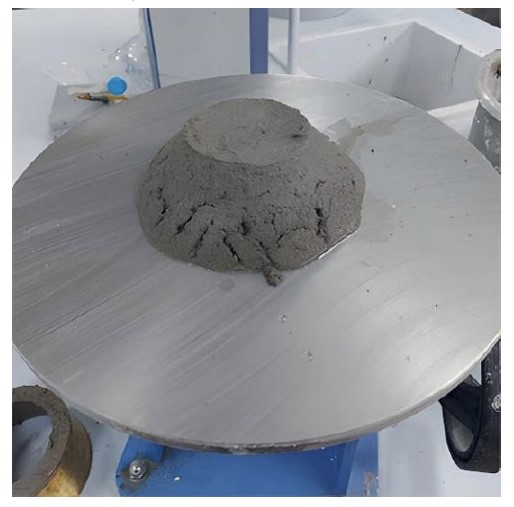
Flow table test setup. Note: The photograph is intended to illustrate the test apparatus only and does not represent the actual flow result.
The mold was positioned at the center of the flow table and filled with fresh mortar in two layers. The first layer was placed at half the mold height and compacted using 25 strokes of a tamping rod. The second layer was then added and compacted again with 25 strokes to ensure uniform distribution. After leveling the surface with a trowel to achieve a smooth, even top, the mold was carefully lifted.
The handle of the apparatus was rotated 15 times, allowing the mortar to spread across the table. The spread diameter was measured along two perpendicular axes, and the average value was recorded as the final flow result.
2.4. Compressive Strength and Flexural Strength
The compressive and flexural strengths of the mortars were determined in accordance with EN 196-1, which specifies the standard procedures for evaluating the mechanical properties of cement mortars.
Figure 2 shows the compressive strength testing apparatus. Freshly cast specimens measuring 40 mm × 40 mm × 160 mm (Fig. 3) were kept in molds for 24 hours in a humid environment at 20 ± 2°C, as specified in EN 196-1. After demolding, the specimens were cured in water until the time of testing.
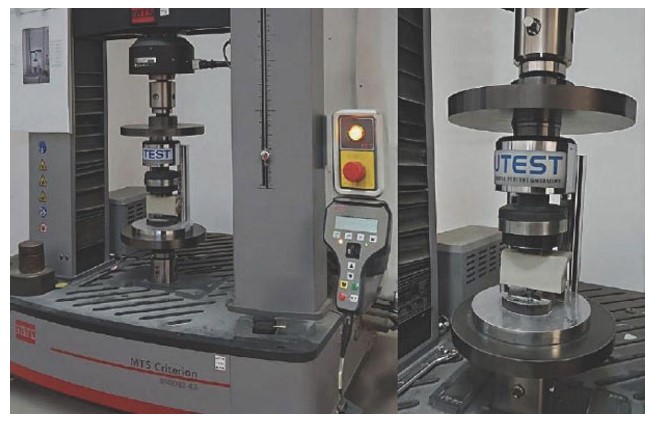
Compressive strength testing apparatus.
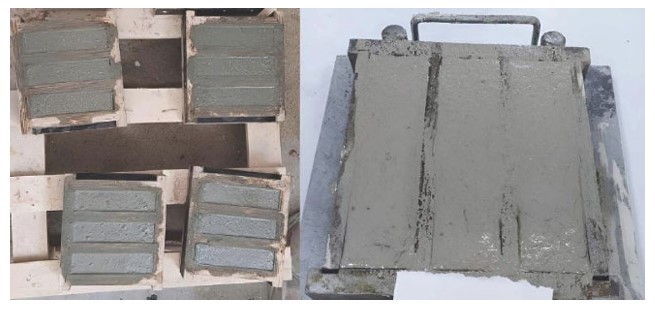
Freshly cast mortar specimens in molds.
Flexural strength was determined using the three-point bending test, in which a cylindrical load was applied at the midpoint of each specimen until failure. The flexural strength (σ) was calculated using Eq. (1):

where:
σ = flexural strength (MPa)
F = force at fracture (N)
L = span length (mm)
b = specimen width (mm)
d = specimen depth (mm)
The resulting halves from the flexural test were then used to determine compressive strength, calculated using Eq. (2):

where:
F=The compressive strength (MPa)
P=Maximum load (or load until failure) to the material (N)
A=A cross section of the area of the material resisting the load (mm2)
A total of 60 mix designs incorporating varying proportions of ESP, FA, SF, and BFS were prepared, resulting in a total of 360 specimens (Fig. 4). Tests were conducted at 7 and 28 days, and the results were statistically analyzed based on the mean and standard deviation for each mixture.
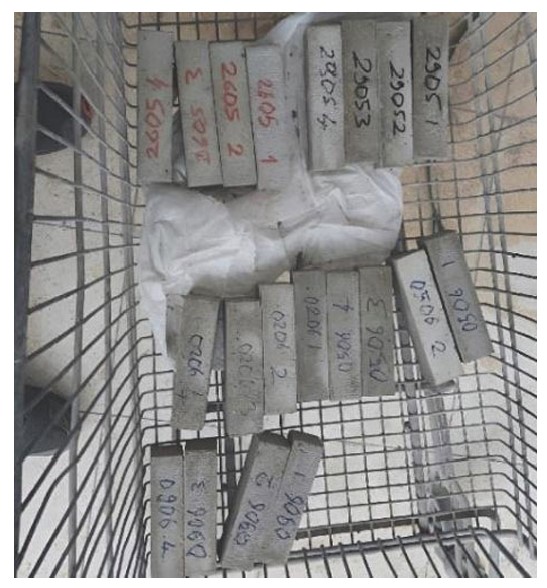
Specimens prepared for compressive and flexural strength testing.
2.5. Shear Strength
Shear strength tests were performed to evaluate the influence of eggshell powder (ESP) on the shear resistance of cement mortars. Seven different mortar mix designs were prepared, containing varying ESP replacement levels by weight: 0%, 5%, 10%, 15%, 20%, 25%, and 30% (Fig. 5). These mixes were designed to investigate the effect of increasing ESP content on the mechanical behavior of the mortars.
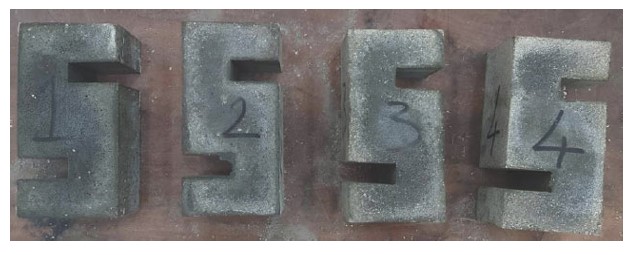
Specimens prepared for shear strength testing.
The shear strength tests were conducted using the Z-push-off method, which is commonly employed to evaluate the shear performance of mortar and concrete specimens. This method involves applying a controlled load until failure, enabling precise measurement of shear resistance. The specimens were prepared and cured in accordance with the relevant standards, ensuring uniformity across all samples. The tests were carried out on the 28th day after casting to assess the shear behavior at later ages.
Shear strength (τ) was calculated using the following formula Eq. (3):

Where:
• τ: Shear strength (MPa)
• V: Maximum load at failure (N)
• A: Cross-sectional area resisting the shear force (mm2)
The test apparatus and setup are shown in Fig. (6). The results obtained from these tests provide valuable insight into the role of eggshell powder (ESP) as a partial cement replacement with respect to shear performance.
2.6. Thermal Performance Analysis
The thermal performance of cement mortars incorporating varying levels of eggshell powder (ESP) was evaluated using four mix designs containing 0%, 15%, 30%, and 50% ESP by weight of cement. Each mix was cast into prismatic molds measuring 7 cm × 15 cm × 15 cm with 4 cm thick walls, forming sealed rectangular chambers for thermal assessment (Fig. 7).
Thermal testing was conducted over a 30-day period in an indoor laboratory environment without any active heating or cooling source. Ambient temperature and humidity were monitored throughout the test period, and all chambers were positioned to receive uniform solar exposure during the daytime.
For temperature monitoring, type-K thermocouples (±0.5°C accuracy) were embedded at the center of each mortar chamber. In addition to internal temperature, ambient air temperature and relative humidity were recorded at five fixed time intervals (09:00, 12:00, 15:00, 19:00, and 00:00) each day.
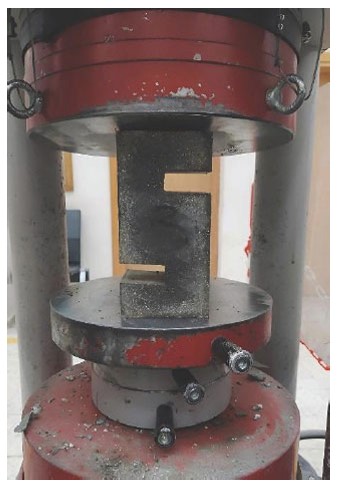
Shear strength testing apparatus and setup.
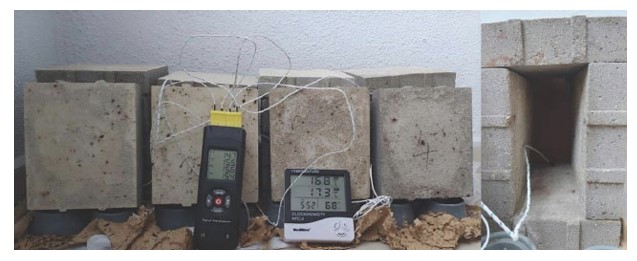
Thermal performance monitoring setup.
Each day was classified as a hot day (> 28°C), mild day (18–28°C), or cold day (< 18°C) based on the ambient temperature at 12:00, to enable consistent interpretation of the thermal regulation capability of each mix. This classification aligns with thermal comfort criteria and facilitates contextual comparison.
The performance of each mortar type was evaluated based on the temperature difference between ambient and internal measurements, allowing quantification of both the thermal insulation and passive heat-retention capacities of the mixes under variable climatic conditions. The experimental results and detailed thermal performance analysis are presented in results and discussion below.
3. RESULTS AND DISCUSSION
This section presents the results of the experimental program, including the flow table, compressive strength, flexural strength, and shear strength analyses. The findings are interpreted in relation to material composition, workability, and mechanical performance. Special emphasis is placed on how variations in eggshell powder (ESP) content and the inclusion of supplementary cementitious materials (SCMs) - namely fly ash (FA), silica fume (SF), and blast furnace slag (BFS) - influence these properties. Comparisons with relevant literature are provided throughout to contextualize and validate the results. Figure 8 illustrates the material composition ratios used in the mortar samples.
Additionally, the material ratios, flow table results, compressive strength (7- and 28-day), and flexural strength (7- and 28-day) values for each sample are presented in Table 4.
The mix design procedure was developed systematically to evaluate the effects of eggshell powder (ESP), both individually and in combination with supplementary cementitious materials (SCMs) - namely fly ash (FA), silica fume (SF), and blast furnace slag (BFS).
Initially, control mortars containing 0–20% ESP (by weight of cement) were produced in 5% increments to determine the optimum ESP replacement level based on mechanical and thermal performance. Subsequently, additional series were prepared by incorporating FA, SF, and BFS individually, each at replacement levels consistent with literature-recommended ranges.
After determining the most effective substitution level for each SCM, combined mixtures were designed by pairing ESP with one SCM at a time (e.g., ESP + FA, ESP + SF, ESP + BFS), followed by a final series containing all four SCMs together.
This stepwise experimental approach aimed to systematically minimize cement consumption while assessing synergistic interactions between ESP and industrial by-products. In total, 60 distinct mortar mixtures were prepared to enable a comprehensive comparison of individual and combined effects on workability, compressive strength, and flexural strength.
The results demonstrated that this structured methodology successfully identified the optimum mix combinations that provide enhanced mechanical and thermal performance while achieving reduced cement usage.
3.1. Evaluation of Workability via Flow Table Test
A total of 60 mortar compositions, each measuring 4 × 4 × 16 cm, were prepared and subjected to flow table tests to evaluate their workability. The results are summarized in Table 4 and visually represented in Fig. (9).
The flow table results illustrate the fluidity of the fresh mortars, a key parameter for assessing their ease of placement. Samples containing 5% and 10% ESP (Samples 2 and 3) exhibited slight improvements in flowability compared to the control (Sample 1). However, as the ESP content increased to 15% and 20% (Samples 4 and 5), a noticeable reduction in flowability was observed (Fig. 10).
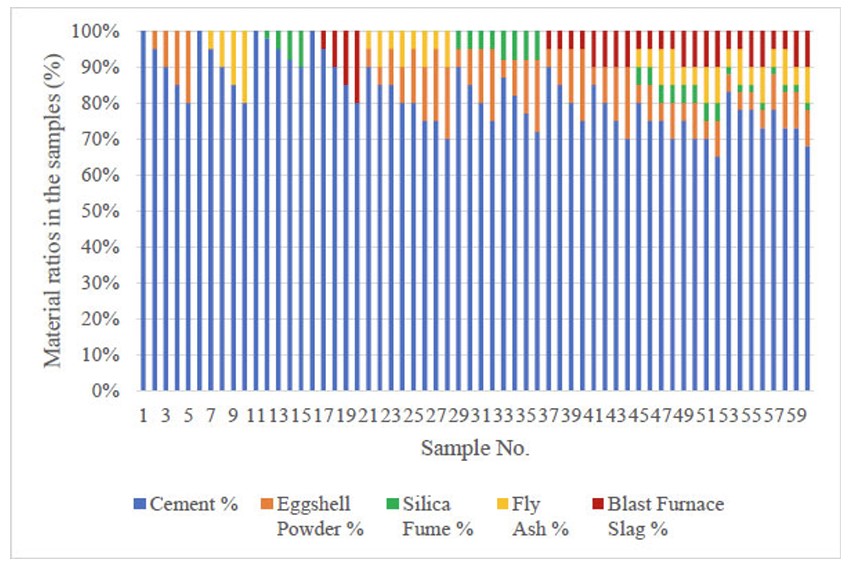
Material ratios in the samples.
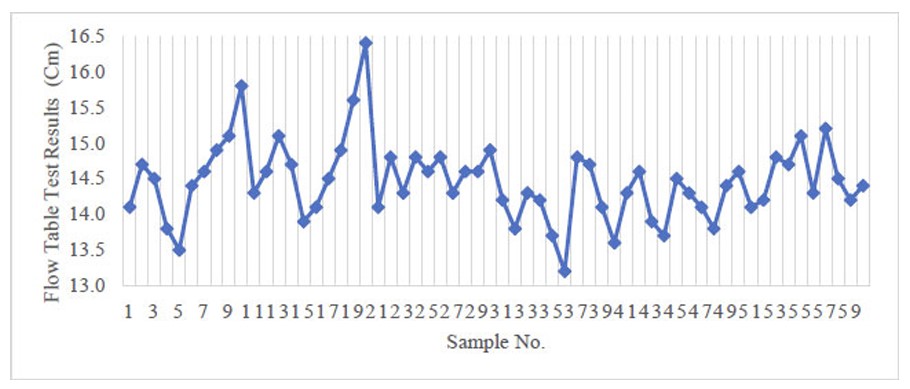
Flow table test results for all mixes.
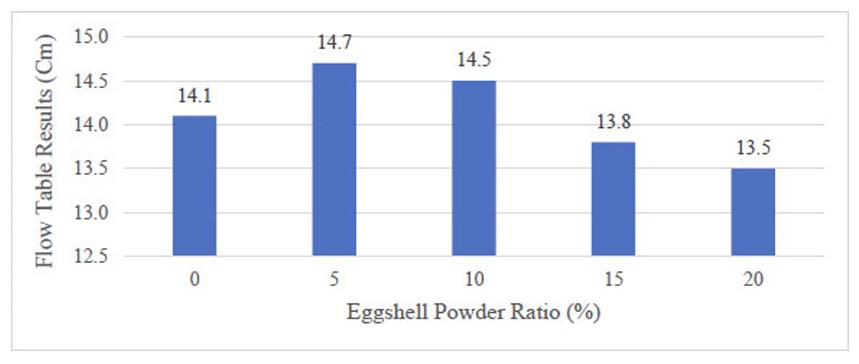
Change in flow table results with varying ESP ratios.
The reduction in flow values with higher ESP content is attributed to the increased water absorption capacity of the fine ESP particles. These particles absorb more water, thereby reducing the free water available for lubrication within the mix [50]. This observation aligns with previous studies that highlight the adverse impact of high-absorption materials on mortar workability. However, some studies have reported minimal or negligible influence of ESP on workability, suggesting that other factors - such as particle size distribution, surface morphology, and the presence of other materials - may also play a significant role [51].
3.2. Compressive Strength and Flexural Strength
As part of this study, 360 mortar specimens measuring 4 cm × 4 cm × 16 cm were prepared using 60 different mix designs containing varying proportions of eggshell powder (ESP), fly ash (FA), silica fume (SF), and blast furnace slag (BFS). The primary objective was to reduce the cement content in mortar mixtures while maintaining or enhancing compressive strength (CS) and flexural strength (FS). Given the significant environmental impact of cement production, ESP was examined as a sustainable alternative to partial cement replacement.
However, previous studies have indicated a reduction in strength when ESP content exceeds 10% by weight. To overcome this limitation, pozzolanic materials such as FA, SF, and BFS were incorporated alongside ESP to optimize strength performance and minimize cement usage.
Initially, mortar mixes were prepared with 0%, 5%, 10%, 15%, and 20% ESP by weight. Subsequently, FA and BFS were added at 0%, 5%, 10%, 15%, and 20% by weight, while SF was included at 0%, 2%, 5%, 8%, and 10% by weight. From these mixes, the two proportions yielding the highest strength values were selected for each material: 5% and 10% ESP, 5% and 10% FA, 2% and 5% SF, and 5% and 10% BFS. These optimal ratios were then combined in various ESP-based mixtures to evaluate their collective effects on compressive and flexural strength.
3.2.1. Compressive Strength
The compressive strength results provide valuable insight into the influence of eggshell powder (ESP) and its synergistic interaction with supplementary cementitious materials (SCMs). The findings demonstrate how ESP content and its combination with fly ash (FA), silica fume (SF), and blast furnace slag (BFS) affect the hydration kinetics, microstructural development, and overall mechanical performance of the mortar.
Compressive strength tests were conducted at 7 and 28 days for all 60 mix designs. The results are summarized in Table 4 and illustrated in Fig. (11).
In the first group of mixes (#1–5), cement was replaced solely with eggshell powder (ESP) in varying proportions (5%, 10%, 15%, and 20%). As shown in Fig. (12), 5% and 10% ESP replacement (samples #2 and #3) led to compressive strength increases of approximately 11% and 14% at 28 days, compared with the control mix (#1) [52]. These improvements are attributed to the filler effect of fine ESP particles and their ability to enhance particle packing density within the cementitious matrix. However, higher replacement levels (15% and 20%) resulted in notable reductions in compressive strength-by 14% and 32%, respectively-mainly due to the dilution of cement content and the limited pozzolanic reactivity of ESP at elevated replacement ratios.
The average 28-day compressive strength of the control mix was 19.54 MPa. Among the 60 mixes, 17 exceeded this baseline value, 9 of which contained ESP. The highest strength was observed in mix #48, which reached 21.93 MPa-representing a 12% increase over the average and a 20% improvement compared with the weakest control sample. Notably, this mix contained 70% cement, 10% ESP, 10% FA, 5% SF, and 5% BFS, demonstrating that a 30% reduction in cement content can be achieved without compromising-and even enhancing-mechanical performance.
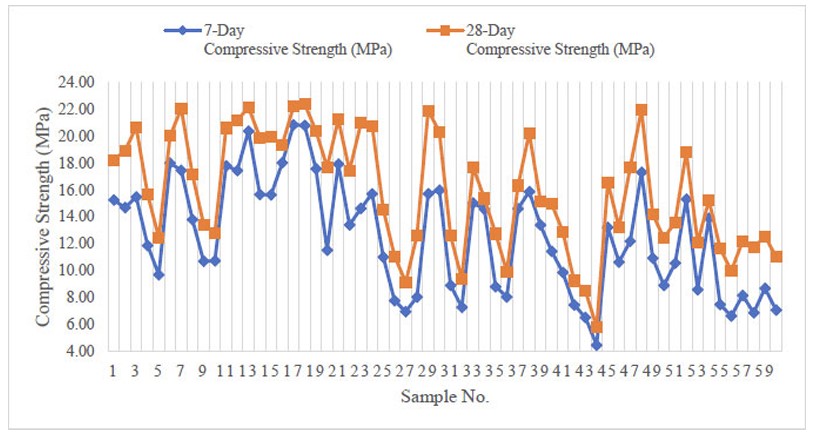
Compressive strength results at 7 and 28 days for all mixes.
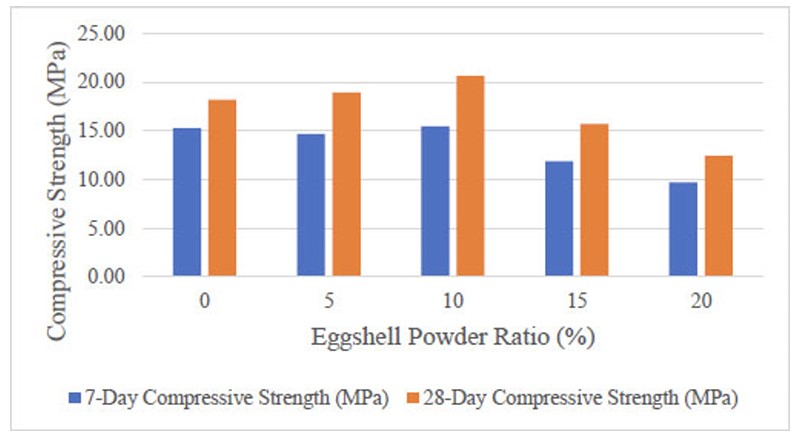
Change in 7-day and 28-day compressive strength results with ESP content.
The incorporation of additional pozzolanic materials such as FA, SF, and BFS alongside ESP contributed significantly to strength development. The pozzolanic activity of FA and SF, particularly their capacity to generate secondary C–S–H gel and fill capillary pores, led to improved matrix densification. Meanwhile, BFS, known for its latent hydraulic properties, further supported strength gain over time. For instance, mixes #48 and #52, which contained all three SCMs, exhibited superior performance despite relatively high ESP levels.
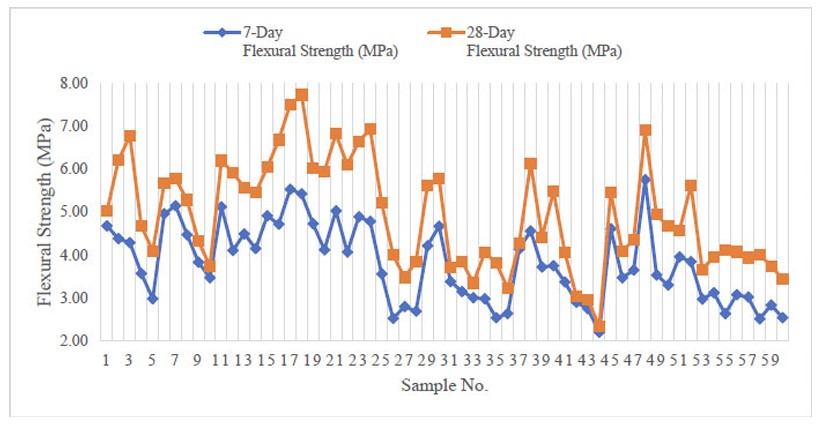
Flexural strength results at 7 and 28 days.
From a microstructural perspective, the combined presence of FA, SF, and BFS with ESP promotes both pozzolanic and filler synergy [8,11]. The amorphous SiO2 and Al2O3 in FA and SF react with Ca(OH)2 released during cement hydration to form secondary C–S–H and C–A–H gels, refining the pore network and strengthening the interfacial transition zone (ITZ) [25]. Simultaneously, BFS contributes additional CaO and latent hydraulic phases, further enhancing long-term strength and microstructural densification [19]. The fine CaCO3 particles in ESP complement these mechanisms by filling micro-voids, acting as nucleation sites for hydration products, and stabilizing early-age C–S–H formation [12,48]. Consequently, the blended systems exhibit a denser and more continuous matrix with fewer interconnected pores-consistent with SEM observations from previous studies that reported improved packing density and reduced microcracking at 5–10 wt.% ESP replacement levels [8,11].
Previous studies corroborate these findings, indicating that the incorporation of pozzolanic materials alongside ESP can markedly enhance compressive strength through complementary microstructural mechanisms [8, 11]. For instance, Teara et al. incorporated up to 30% FA by weight of cement with 0–15% ESP and observed a 16.8% increase in compressive strength for mixes with 5% ESP compared with the control [53]. This enhancement was attributed to secondary C–S–H gel formation and microvoid filling provided by the amorphous silica in FA, which promoted matrix densification and reduced pore connectivity. At higher ESP levels (10–15%), however, the dilution of reactive clinker phases outweighed these benefits, resulting in lower strength [53].
These literature findings reinforce the mechanisms observed in the present experimental program. Similar trends were evident in this study, where compressive strength decreased by 15–49% in mixes with high ESP and pozzolan content-except for mixes #48 and #52, which achieved notably higher strengths due to the balanced synergy among ESP, FA, SF, and BFS. The micro-filler and nucleation effects of ESP, combined with the pozzolanic reactions of SCMs, produced a denser and more cohesive microstructure that mitigated dilution effects [11,12]. Consequently, low-to-moderate ESP levels (≈5–10 wt.%) yielded optimized hydration, reduced porosity, and stronger ITZs, explaining the enhanced mechanical performance observed [48].
In summary, while excessive ESP alone may reduce strength due to cement dilution, the addition of supplementary cementitious materials effectively counteracts this limitation, yielding mortars with superior mechanical properties [19]. Hence, the combined use of ESP with FA, SF, and BFS presents a promising pathway toward sustainable and high-performance cementitious systems [8, 11]. Overall, the results confirm that ESP primarily acts as a micro-filler and hydration accelerator at low dosages, whereas its combination with SCMs transforms it into a synergistic component that enhances both early-age and long-term performance [8,12].
3.2.2. Flexural Strength
Flexural strength tests were conducted at 7 and 28 days for all 60 mortar mixes to evaluate the tensile performance of the composites. The results are summarized in Table 4 and illustrated in Fig. (13).
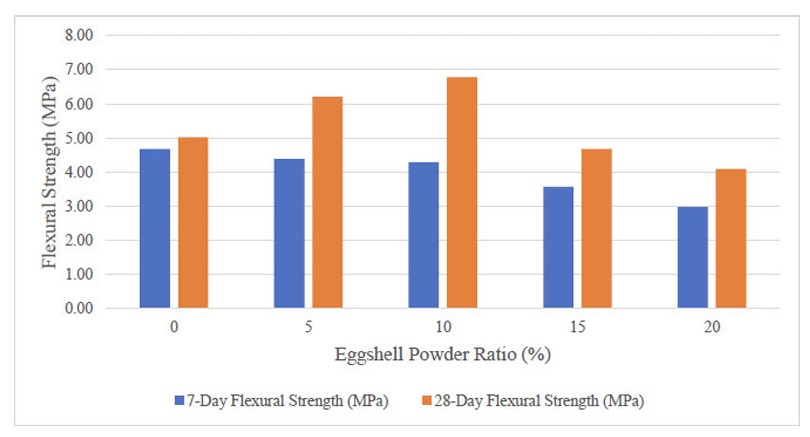
Change in 7-day and 28-day flexural strength results with ESP content.
In samples #1–5, cement was partially replaced with eggshell powder (ESP), as shown in Fig. (14). Mortars containing 5% and 10% ESP (samples #2 and #3) exhibited flexural strength increases of 23% and 35%, respectively, at 28 days compared with the control sample (#1). However, mixes with 15% and 20% ESP (samples #4 and #5) showed corresponding reductions of 7% and 19%, respectively.
The average 28-day flexural strength of the control mortars was 5.89 MPa. Among all mixes, 14 exceeded this value, eight of which contained ESP. The highest flexural strength (6.93 MPa) was recorded for sample #24, corresponding to a 17.6% improvement over the control mortars and a 38% increase compared with the weakest control sample (#1). This mix consisted of 80% cement, 10% ESP, and 10% FA, achieving a 20% reduction in cement content while yielding a notable enhancement in flexural strength. The second-highest value (6.90 MPa) was obtained for sample #48, representing a 17.1% improvement over the control. This mix contained 70% cement, 10% ESP, 5% SF, 10% FA, and 5% BFS, demonstrating that a 30% reduction in cement content can be achieved without compromising strength.
When evaluating all 60 mixes, 22 samples exhibited higher 28-day flexural strength than the control. Of these, 12 contained ESP, indicating that low-to-moderate ESP content contributes positively to tensile performance. However, the most significant strength gains were observed in blended systems combining ESP with supplementary cementitious materials (SCMs). These results confirm a synergistic effect between ESP and SCMs in enhancing tensile capacity, particularly when FA and SF are incorporated with moderate ESP levels.
This synergy is attributed to the microstructural refinement and pozzolanic reactivity of the blended systems, which improve load distribution and crack resistance. The contribution of FA to tensile strength is primarily associated with enhanced interfacial bonding and a refined pore structure, while SF improves matrix density and crack propagation resistance. These findings are consistent with compressive strength trends, further emphasizing the effectiveness of blended pozzolanic systems in producing high-performance mortars.
Notably, mixes containing high ESP content alone exhibited poor performance; however, this limitation was largely mitigated when ESP was combined with appropriately proportioned SCMs [53, 54]. These experimental observations are in strong agreement with previous studies in the literature that have investigated the impact of ESP on flexural performance in diverse cementitious systems.
From a microstructural perspective, the improvement in flexural strength observed in mixes containing 5–10 wt.% ESP can be attributed to the formation of a denser and more cohesive matrix. The fine CaCO3 particles in ESP act as nucleation sites for early hydration, accelerating C–S–H gel formation and promoting a more uniform distribution of hydration products. This refinement strengthens the interfacial transition zone (ITZ) between paste and aggregates, delaying microcrack initiation and reducing crack propagation under flexural loading. Similar mechanisms were reported by Gowsika et al. [31] and Parthasarathi et al. [40], who observed that incorporating 5–10 wt.% ESP enhanced flexural strength through improved C–S–H gel development and pore refinement within the ITZ.
When ESP is combined with supplementary cementitious materials (SCMs) such as FA and SF, the amorphous SiO2 and Al2O3 components react with Ca(OH)2 released during hydration to form secondary C–S–H and C–A–H gels. These products fill capillary voids, refine the pore structure, and enhance the compactness of the matrix. This synergistic reaction is consistent with findings by Hama [39] and Pliya & Cree [45], who reported that low-to-moderate ESP replacement levels improve tensile and flexural strength through enhanced particle packing and the formation of additional hydration products, whereas higher ESP levels lead to dilution effects and reduced cohesion.
The micro-filler and nucleation effects of ESP, coupled with the pozzolanic reactivity of SCMs, generate a more homogeneous and well-bonded microstructure. These combined effects explain the superior flexural strength observed in ESP–SCM blended mortars in this study, aligning with SEM-based evidence from prior research [8, 11, 12, 23, 40, 48].
In contrast, Binici et al. [ 44 ] and Bhuvaneswari [ 55 ] reported reductions in flexural strength at high ESP replacement levels, which they attributed to weaker aggregate bonding and limited CaO activity. Conversely, Yu et al [ 43 ] demonstrated that ESP with higher calcium content (~95%) can offset this limitation, yielding up to 22.9% higher flexural strength due to accelerated hydration and enhanced microstructural bonding. These comparative findings highlight that ESP performance is strongly influenced by its chemical composition, fineness, and replacement ratio.
Overall, both the literature and the present experimental results indicate that ESP acts as a micro-filler and nucleation enhancer at low dosages, promoting a denser ITZ and improved crack resistance, while its synergy with SCMs enables further microstructural refinement. This consistent evidence across multiple studies confirms that the observed mechanical enhancements are primarily driven by hydration acceleration, secondary C–S–H formation, and uniform stress transfer through a densified matrix.
3.2.3. Shear Strength
For the shear strength tests, seven cement mortar samples were prepared: one control mix without eggshell powder (ESP) and six containing ESP at 5%, 10%, 15%, 20 %, 25%, and 30% by weight of cement. The shear strength tests were conducted on the 28th day using the Z-push-off method, and the results are presented in Fig. (15).
The shear strength of the control sample without ESP was 2.01 MPa. The sample containing 5% ESP exhibited a strength of 2.21 MPa, while the 10% ESP specimen achieved the highest value at 2.58 MPa. Specimens with 15%, 20%, 25%, and 30% ESP recorded strengths of 2.51 MPa, 2.32 MPa, 1.98 MPa, and 1.75 MPa, respectively. Notably, the 10% ESP mix demonstrated a 28% increase in shear strength compared with the control [56]. Similarly, the 15% and 20% ESP mixes showed 24% and 15% higher shear strength values, respectively.
The decline in shear strength observed in the 25% and 30% ESP mixtures can be attributed to the excessive dilution of cement within the mortar matrix, which reduces binder efficiency. These results indicate that partial cement replacement with ESP enhances shear performance up to a 20% substitution level, whereas higher replacement ratios lead to diminished strength. This reduction likely stems from the insufficient availability of reactive cementitious components necessary for proper hydration and bonding.
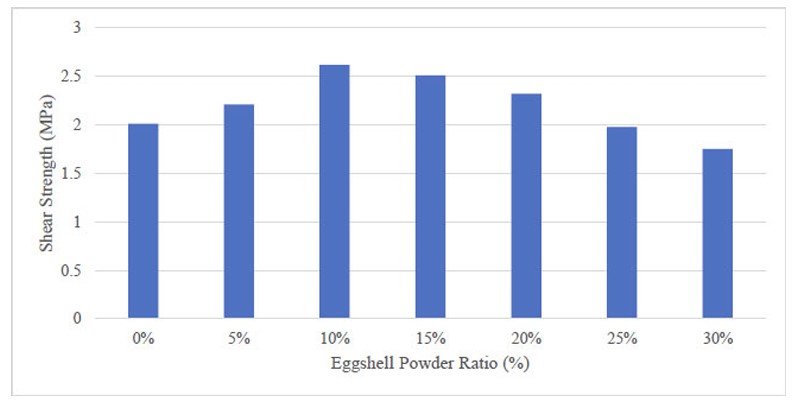
Shear strength test results of all mixes.
From a microstructural standpoint, the enhancement in shear strength at 10–20 wt.% ESP is primarily attributed to improved interfacial adhesion and matrix cohesion. The fine CaCO 3 particles in ESP act as nucleation centers during early hydration, promoting the generation of additional C–S–H gel and strengthening the bond between the cement paste and sand grains. This mechanism results in a denser interfacial transition zone (ITZ) that enhances load transfer capacity under shear. Similar microstructural phenomena were reported by Hamada et al. [ 11 ], Sathiparan [ 19 ], and Nandhini & Karthikeyan [ 8 ], who associated ESP’s filler effect and calcium-rich composition with improved bonding in cementitious systems.
At higher ESP levels (> 20 wt.%), excessive CaCO 3 content can increase porosity and hinder the formation of a continuous C–S–H gel network, thereby reducing cohesion. Amin et al. [ 7 ] and Tchuente et al. [ 57 ] similarly reported that excess calcium-based fillers disrupt gel continuity and weaken the microstructural framework-findings consistent with the reductions observed here at 25–30 wt.% ESP.
Overall, the results confirm that ESP improves shear strength up to a 20% replacement ratio, while higher dosages lead to dilution-induced strength loss. These outcomes, consistent with previous studies, indicate that low-to-moderate ESP levels (≈10–15 wt.%) are optimal for enhancing shear performance [48, 56-58]
3.2.4. Thermal Analysis
The thermal performance analysis was conducted using cement-based mortar samples containing eggshell powder (ESP) at replacement levels of 0 %, 15 %, 30 %, and 50 % by weight. These samples were used to construct closed chambers measuring 7 cm × 15 cm × 15 cm with wall thickness of 4 cm. Long-term thermal measurements were recorded at five specific times of the day (09:00, 12:00, 15:00, 19:00, and 00:00) using type-K thermocouples. During each test, ambient temperature, relative humidity, and internal chamber temperatures were monitored continuously.
To evaluate thermal performance systematically, the experimental period was divided into three ambient temperature categories-hot days, mild days, and cold days-based on temperature readings recorded at the specified intervals over a 30-day period.
The categorization criteria were as follows:
- Hot Days (Above 28°C): Days where the ambient temperature exceeded 28°C during peak hours (typically between 12:00 and 15:00). These days represent high thermal stress conditions, suitable for evaluating the samples’ cooling capacity and their potential to maintain indoor comfort under heat stress.
- Mild Days (18–28°C): Days where the ambient temperature ranged between 18°C and 28°C. This range reflects thermally comfortable conditions with limited heating or cooling demand, ideal for assessing the passive thermal regulation properties of the mortars.
- Cold Days (Below 18°C): Days where the ambient temperature was below 18°C, representing conditions suitable for evaluating the samples’ heat retention ability and their effectiveness in maintaining indoor comfort at low temperatures.
The thresholds for these categories were established based on temperature distribution trends observed during the testing period and are consistent with established thermal comfort models in the literature. This classification enables a structured and comparative analysis of ESP-containing mortars under varying climatic conditions.
By segmenting the data into these categories, the study provides a comprehensive understanding of how ESP-modified mortars respond to different temperature regimes, demonstrating their potential for enhancing indoor thermal comfort across diverse environmental settings.
At 09:00, when solar radiation was minimal (Fig. 16), the lowest ambient temperature recorded was 4.2°C. The corresponding internal temperatures for samples containing 0%, 15%, 30%, and 50% ESP were 2.9°C, 4.1°C, 3.9°C, and 4.0°C, respectively. The control mix without ESP exhibited an internal temperature 1.3°C lower than the ambient temperature, whereas ESP-containing samples maintained temperatures closer to the ambient, indicating improved thermal stability.
On a mild day with an ambient temperature of 20.1°C, all samples exhibited internal temperatures below the ambient value. The internal readings were 18.0°C, 19.6°C, 20.9°C, and 21.1°C for the 0%, 15%, 30%, and 50% ESP samples, respectively. The control sample lagged 2.1°C below the ambient temperature, while the 50% ESP mix achieved an internal temperature 1°C higher, demonstrating superior thermal retention capability.
On the warmest morning, when the ambient temperature reached 30.4°C, internal temperatures were measured as 26.9°C, 24.2°C, 24.9°C, and 25.2°C for 0%, 15%, 30%, and 50% ESP, respectively. The ESP-modified samples exhibited a cooling effect of up to 6.2°C, maintaining a noticeably lower internal temperature than the ambient environment, thereby contributing to improved thermal comfort under high-heat conditions.
At 12:00, the sun began to exert a significant influence on the surrounding environment, leading to a noticeable rise in both ambient and internal temperatures (Fig. 17). The lowest ambient temperature recorded during this period was 5.1°C, while the internal temperatures for the 0%, 15%, 30%, and 50% ESP samples were 3.4°C, 5.5°C, 4.8°C, and 5.0°C, respectively. The 15% ESP sample exhibited a slight advantage, maintaining an internal temperature 0.4°C higher than the ambient value.
On a mild day with an ambient temperature of 20°C, the internal temperatures recorded for the 0%, 15%, 30%, and 50% ESP samples were 19.0°C, 20.0°C, 19.9°C, and 20.3°C, respectively. Among these, the 50% ESP mix demonstrated the best thermal performance, maintaining an internal temperature 0.3°C above the ambient temperature.
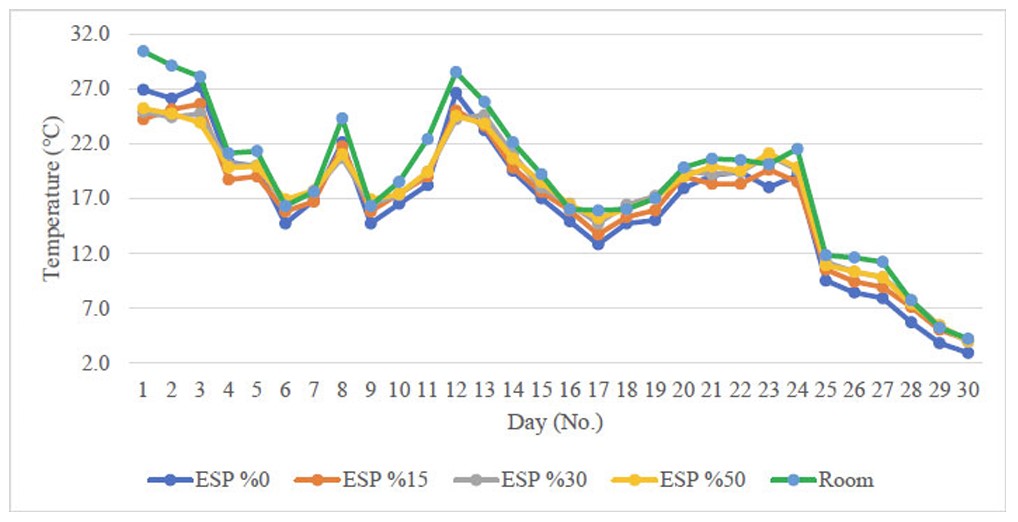
Internal temperatures at 09:00 over 30 days for samples with different ESP levels.
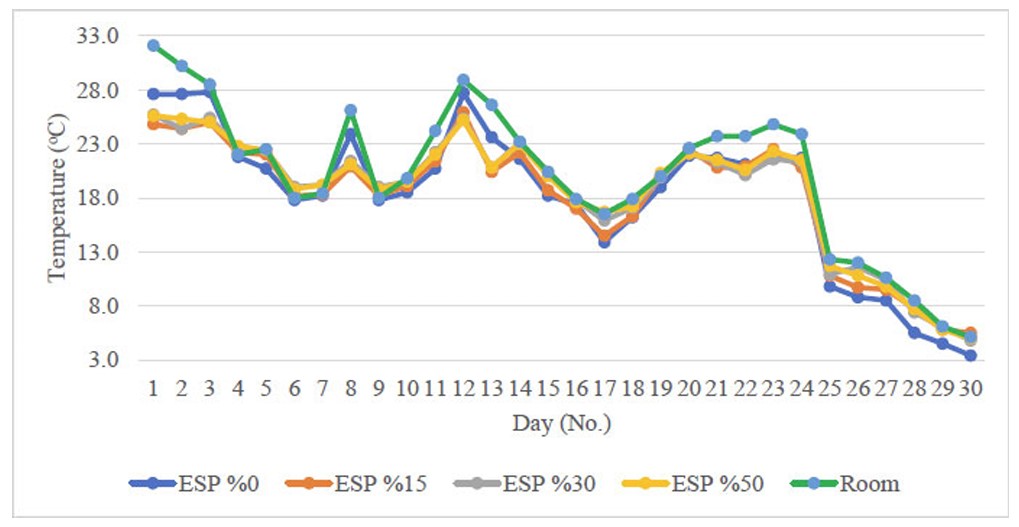
Internal temperatures at 12:00 over 30 days for samples with different ESP levels.
On a warm day with an ambient temperature of 32.1°C, the internal temperatures of the 0%, 15%, 30%, and 50% ESP samples were 27.6°C, 24.8°C, 25.7°C, and 25.6°C, respectively. The ESP-containing mortars displayed superior thermal comfort, achieving internal temperatures up to 7.3°C lower than the ambient value, highlighting their effective passive cooling capacity under elevated temperature conditions.
At 15:00, the ambient temperature typically reached its daily peak due to the maximum solar intensity (Fig. 18). The lowest ambient temperature recorded during this interval was 5.5°C, while the internal temperatures for samples containing 0%, 15%, 30%, and 50% ESP were 3.8°C, 5.5°C, 5.0°C, and 5.4°C, respectively. The 15% ESP sample exhibited an internal temperature equal to the ambient value, whereas the other samples showed slightly lower internal temperatures, indicating limited heat retention under cold conditions.
On a mild day with an ambient temperature of 20.4°C, the internal temperatures for the 0%, 15%, 30%, and 50% ESP samples were 19.0°C, 20.4°C, 20.8°C, and 20.4°C, respectively. The 30% ESP sample achieved the highest internal temperature, exceeding the ambient temperature by 0.4°C, while the remaining samples exhibited internal temperatures slightly below ambient.
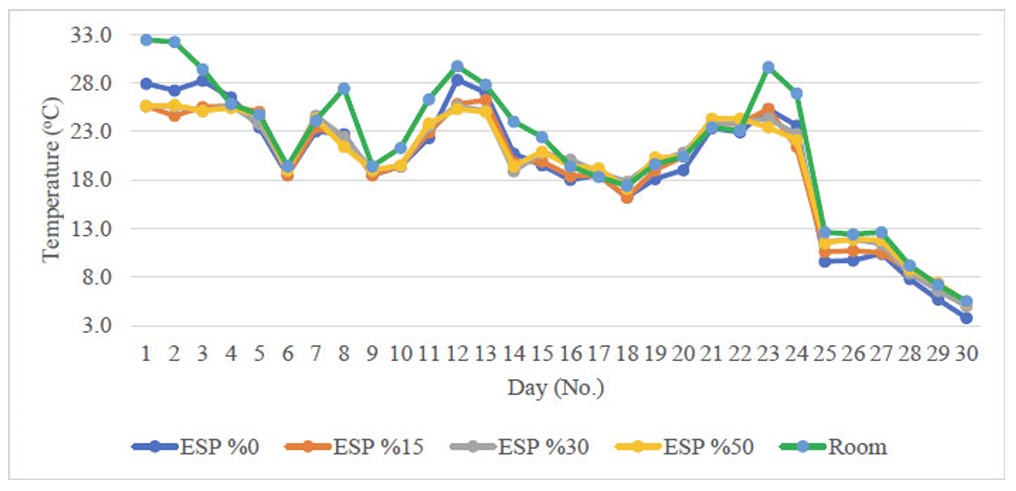
Internal temperatures at 15:00 over 30 days for samples with different ESP levels.
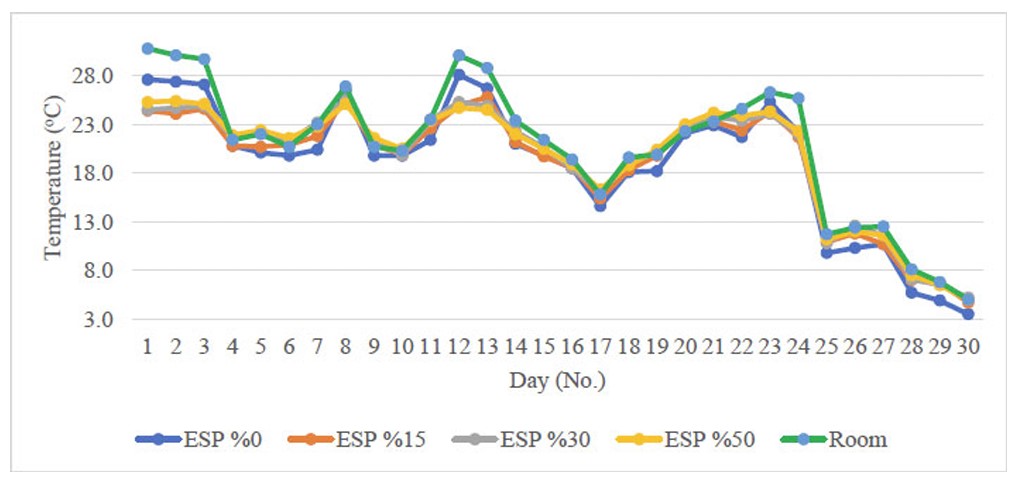
Internal temperatures at 19:00 over 30 days for samples with different ESP levels.
On the warmest day, when the ambient temperature peaked at 32.4°C, internal temperatures of the 0%, 15%, 30%, and 50% ESP samples were 27.9°C, 25.6°C, 25.6°C, and 25.6°C, respectively. The control mix without ESP maintained an internal temperature 4.5°C lower than the ambient temperature, whereas ESP-containing samples demonstrated superior thermal regulation, maintaining internal temperatures up to 6.8°C lower than the surrounding environment. This behavior underscores the passive cooling potential of ESP-modified mortars under high solar exposure.
By 19:00, the sun’s influence had diminished, and ambient temperatures began to decline (Fig. 19). The lowest ambient temperature recorded during this period was 5.0°C, while the internal temperatures for the 0%, 15%, 30%, and 50% ESP samples were 3.5°C, 4.7°C, 5.2°C, and 5.0°C, respectively. The 30% ESP sample exhibited an internal temperature 0.2°C higher than the ambient value, whereas the 50% ESP sample maintained an internal temperature equal to the ambient.
On a mild day, with an ambient temperature of 19.9°C, the internal temperatures of the 0%, 15%, 30%, and 50% ESP samples were 18.2°C, 19.8°C, 20.2°C, and 20.4°C, respectively. The samples containing 30% and 50% ESP exceeded the ambient temperature by 0.3°C and 0.5°C, indicating enhanced heat-retention capability during evening conditions.
On a warm evening, when the ambient temperature reached 30.8°C, the internal temperatures were 27.6°C, 24.4°C, 24.5°C, and 25.3°C for the 0%, 15%, 30%, and 50% ESP mixes, respectively. The ESP-containing mortars exhibited internal temperatures up to 6.4°C lower than the ambient environment, providing improved thermal comfort as the external temperature decreased.
At midnight, the ambient temperature reached its lowest daily level (Fig. 20). On the coldest night, with an ambient temperature of 4.1°C, the internal temperatures for the 0%, 15%, 30%, and 50% ESP samples were 2.7°C, 4.2°C, 4.0°C, and 4.0°C, respectively. The 15% ESP sample exhibited an internal temperature 0.1°C higher than the ambient value, demonstrating a slight heat-retention advantage under low-temperature conditions.
On a mild night, when the ambient temperature was 20.4°C, the internal temperatures of the 0%, 15%, 30%, and 50% ESP samples were 19.2°C, 20.1°C, 20.9°C, and 20.7°C, respectively. The samples containing 30% and 50% ESP maintained internal temperatures 0.5°C and 0.3°C higher than the ambient value, confirming their enhanced thermal stability in moderate nighttime conditions.
On the warmest night, with an ambient temperature of 28.8°C, the internal temperatures were 27.9°C, 25.9°C, 25.4°C, and 25.7°C for the 0%, 15%, 30%, and 50% ESP samples, respectively. The ESP-modified mortars sustained internal temperatures up to 3.4°C lower than the ambient environment, indicating a notable passive cooling effect and improved nighttime thermal comfort.
The humidity measurements recorded at five distinct time intervals over a 30-day period are presented in Fig. (21). This figure illustrates the temporal variation in ambient humidity, providing a clear visualization of daily trends and facilitating a comprehensive interpretation of moisture fluctuations within the testing environment.
In this study, ambient humidity and temperature measurements were carried out in closed chambers constructed using cement-based mortar samples containing different proportions of eggshell powder (ESP), along with a control sample without ESP. The analysis indicated that ambient humidity had no significant influence on the observed temperature variations, confirming that the thermal performance of the specimens was primarily governed by material composition rather than atmospheric moisture. The relationship between ambient temperature and humidity is illustrated in Fig. (22).
Correlation analysis revealed a weak negative relationship between ambient humidity and temperature (r = –0.10). This low correlation coefficient indicates that fluctuations in ambient humidity exert a negligible influence on temperature variation. These results suggest that cement-based mortars inherently exhibit passive resistance to humidity-driven thermal changes. However, to gain a more comprehensive understanding, further investigations under diverse environmental conditions and extended exposure durations are recommended.
The results further demonstrate that eggshell powder (ESP) markedly enhances the thermal performance of cement-based composites [8, 11, 16, 59]. Mortars with higher ESP contents-particularly 30% and 50%-exhibited superior thermal regulation, maintaining internal temperatures closer to or below ambient levels under both hot and cold conditions. These outcomes underscore the potential of ESP as a sustainable additive for improving the thermal efficiency of construction materials.
From a microstructural perspective, the improved thermal performance can be attributed to the porous morphology and high calcium carbonate (CaCO 3 ) content of ESP, which collectively reduce the effective thermal conductivity of the mortar matrix. The fine ESP particles introduce discontinuities in heat-transfer pathways and increase phonon scattering, thereby restricting heat flow through the composite. Additionally, closed micropores within ESP-modified mortars trap air pockets that function as natural thermal insulators. These combined effects result in lower heat conduction during hot periods and enhanced heat retention during cooler conditions.
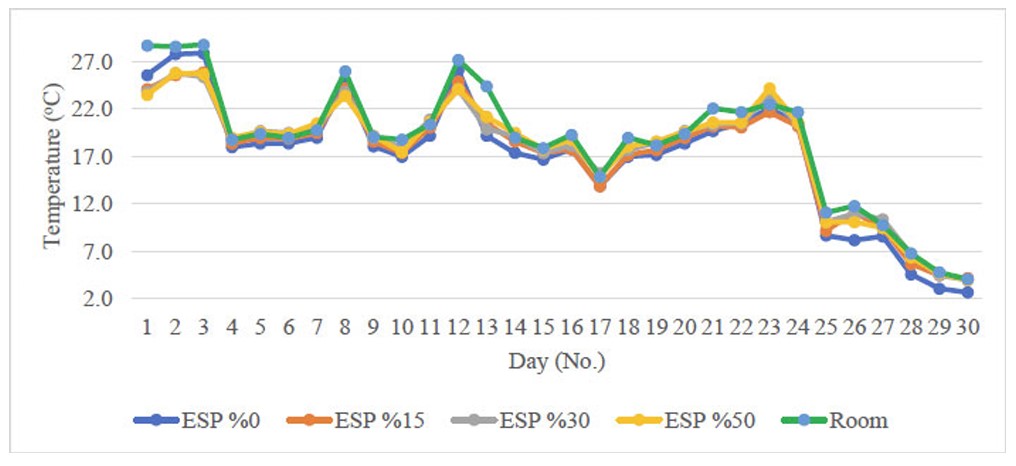
Internal temperatures at 00:00 over 30 days for samples with different ESP levels.
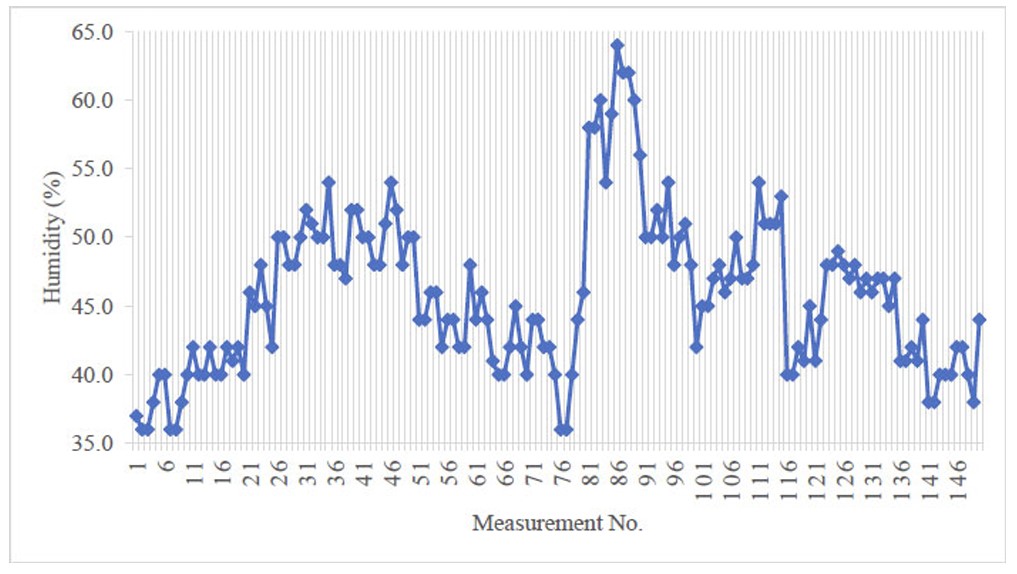
Humidity measurements recorded at different time intervals over 30 days.
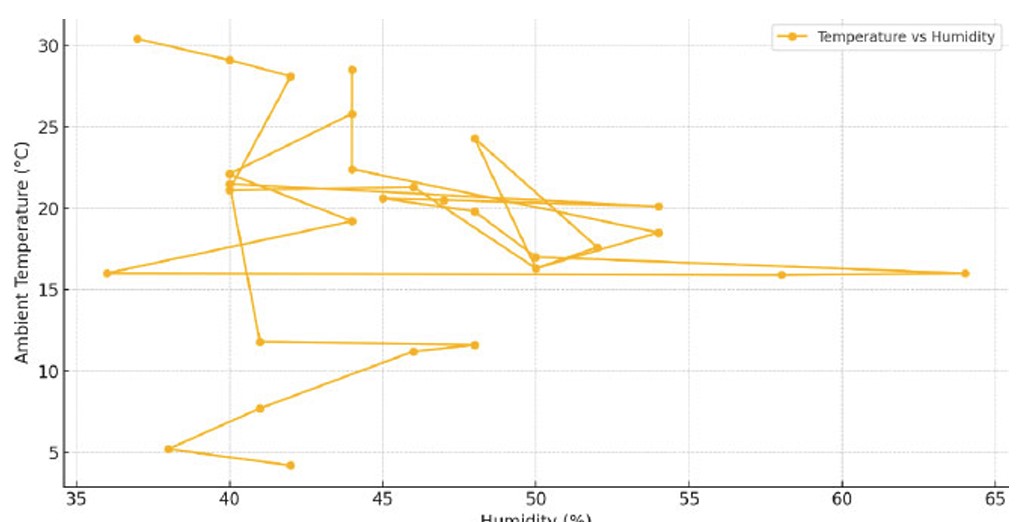
Relationship between ambient temperature and humidity.
Previous studies (e.g., Hamada et al. [ 11 ]; Nandhini & Karthikeyan [ 8 ] similarly confirmed that calcium-rich fillers, such as ESP, can decrease thermal conductivity and increase thermal inertia in cementitious systems-leading to slower heat transfer and greater heat-retention capacity. This dual effect-slower heat ingress and delayed heat release-accounts for the reduced diurnal temperature fluctuations observed in the ESP-modified chambers.
Furthermore, the influence of ambient humidity on internal temperature was found to be statistically insignificant, indicating that the thermal improvements in ESP-containing mortars are predominantly governed by their intrinsic microstructural and thermal properties, rather than by external environmental factors.
Nonetheless, it must be acknowledged that the current experimental setup employed small-scale laboratory chambers. While these results provide clear evidence of the passive thermal regulation potential of ESP-modified mortars, large-scale field investigations are necessary to confirm their practical applicability under real climatic conditions. Future studies should focus on long-term outdoor testing, building-scale prototypes, and dynamic thermal modeling to assess the scalability and durability of ESP-integrated systems.
In summary, ESP-based mortars enhance thermal regulation while remaining largely unaffected by humidity variations, offering a reliable solution for energy-efficient construction across diverse climatic zones. The findings confirm that ESP’s micro-filler action and pore-inducing behavior are key to its passive heat-moderation mechanism, validating its role as a sustainable and eco-efficient additive for next-generation cementitious materials.
4. STUDY LIMITATIONS AND FUTURE SCOPE
The observed reduction of up to 7°C in internal temperature demonstrates a clear potential for improved thermal insulation capacity in practical construction applications. When scaled to building envelopes, such reductions could lead to a measurable decrease in cooling energy demand in hot climates and lower heat loss in cold environments, underscoring the broader applicability of ESP-modified mortars for enhancing passive thermal regulation.
However, the findings of this study are based on short-term laboratory tests (7–28 days) and small-scale specimens. Long-term durability assessments-such as freeze–thaw resistance, chloride ion penetration, sulfate attack, and carbonation-were not included in the current work. Therefore, the results should be interpreted within the context of early-age mechanical and thermal performance.
Future research should extend the experimental framework to include large-scale wall prototypes, dynamic thermal simulation models, and comprehensive durability and microstructural analyses (e.g., SEM, XRD, TGA) to validate the scalability and long-term stability of ESP-modified mortars under realistic environmental conditions.
CONCLUSION
Within the scope of short-term laboratory testing, the findings indicate that low-to-moderate ESP incorporation (≈5–10 wt.%), in combination with supplementary cementitious materials (SCMs), provides a balanced enhancement in both mechanical and thermal performance. The optimal blended mix (70% cement, 10% ESP, 10% FA, 5% SF, and 5% BFS) achieved approximately 12% higher compressive strength and 17.1% higher flexural strength at 28 days compared with the control, while the 10 wt.% ESP variant reached nearly 28% higher shear strength at the same age. Small passive chambers (7 × 15 × 15 cm; 4 cm wall) exhibited peak indoor temperature reductions of up to ≈7°C during hot periods, indicating a meaningful passive thermal response under the tested conditions. However, workability losses became evident above 15 wt.% ESP, and higher-ESP mixes failed to retain the mechanical gains observed at ≤10 wt.%. These results collectively suggest that low-to-moderate ESP dosages, particularly when combined with FA, SF, and BFS, offer a promising cement-reduction strategy consistent with the filler–packing and nucleation mechanisms reported in previous studies.
The interpretation and generalization of these results, however, are subject to several limitations. The thermal evaluation was performed using small-scale indoor chambers without active HVAC systems and did not include direct measurements of thermal conductivity (λ) or specific heat capacity (Cp); therefore, building-scale energy implications cannot be directly inferred. In addition, the number of replicates for certain datasets (e.g., shear strength) was limited, meaning that while the observed trends are consistent, further statistical validation (e.g., ANOVA, confidence intervals) is required. The study duration was limited to 7–28 days, and critical microstructural and durability indicators-including SEM/XRD/TGA, freeze–thaw resistance, chloride ingress, sulfate attack, and carbonation behavior-remain to be explored.
AUTHORS’ CONTRIBUTIONS
The authors confirm contribution to the paper as follows: E.T.: Conceptualization, methodology, investigation, experimental work, data curation, formal analysis, writing-original draft preparation; R.A.: Supervision, project administration, experimental guidance, writing, review and editing, validation. All authors have read and agreed to the published version of the manuscript.
LIST OF ABBREVIATIONS
| ESP | = Eggshell Powder |
| SCMs | = Supplementary Cementitious Materials |
| FA | = Fly Ash |
| SF | = Silica Fume |
| BFS | = Blast Furnace Slag |
| CS | = Compressive Strength |
| FS | = Flexural Strength |
| SS | = Shear Strength |
| w/b | = Water-to-Binder Ratio |
AVAILABILITY OF DATA AND MATERIALS
The data supporting the findings of the article will be available from the corresponding author [E.T] upon reasonable request.
ACKNOWLEDGEMENTS
The author would like to express sincere gratitude to the Construction Materials Laboratory at Istanbul Technical University for providing access to essential equipment and materials used in this study.
Their support greatly contributed to the successful completion of the experimental work.