All published articles of this journal are available on ScienceDirect.

Assessment of the Physical and Mechanical Properties of Autoclaved Aerated Concrete (AAC) Incorporated with Sisal Fibers and Nano-Aluminum Particles

Abstract
Introduction
Autoclaved Aerated Concrete (AAC) is a lightweight, thermally insulating, and fire-resistant building material that has gained popularity in sustainable construction due to its lower energy requirements during production and minimal environmental impact. AAC is composed of cement, sand, lime (CaO), water, and nano-aluminum powder. Despite its excellent physical properties, its mechanical resistance remains low. This study aims to examine the effect of sisal fibers and nano-aluminum on the physical and mechanical properties of autoclaved aerated concrete blocks.
Methods
The experimental program involved adding Sisal fibers to the AAC mix; additionally, the aluminum in AAC was replaced with nano-aluminum. Three samples were produced and labeled A, B, and C, with sisal fiber contents of 0.1%, 0.2%, and 0.3% by total volume, each sample consisting of three specimens for each test. The total number of samples are 36.
Results
The results show that AAC reinforced with nano-aluminum and sisal fibers improved compressive and flexural strength. However, the density increased to between 734 kg/m3 and 752 kg/m3, while the thermal conductivity reached 0.19 W/m.K. According to the ASTM C 1693-11 specifications, which define the density as 400 to 800 kg/m3, compressive strength as 2 MPa to 8 MPa, and thermal conductivity as 0.09 to 0.18 W/m.K.
Discussion
The improvement in mechanical performance is attributed to the reinforcing effect of sisal fibers, which bridge micro-cracks, and the high reactivity of nano-aluminum. SEM analysis confirmed the formation of well-developed tobermorite structures, which are responsible for the increased strength. While the thermal conductivity (0.19 W/m.K) slightly exceeded the standard range (0.09-0.18 W/m.K), it remains within an acceptable range for structural efficiency.
Conclusion
The incorporation of sisal fibers and nano-aluminum transforms AAC into a stronger material. This modified AAC is suitable for lightweight structural units and low-rise load-bearing walls in residential buildings, providing a balance between sustainability and structural integrity.
1. INTRODUCTION
Since the mid-1920s, AAC has been used in both non-structural and structural construction. Compared to traditional concrete, AAC saves 40%-70% of energy per unit of material, making it environmentally friendly [1]. Sand, lime, cement, water, and an expansion agent (most frequently aluminum powder) are the raw materials used in the production of AAC [2, 3]. The creation of uniform pores in the structure using a foaming agent and a calcium oxide-based composition forms the basis of the production process. These uniform pores enable AAC's high heat resistance, adequate heat and sound insulation, and lightweight [4, 5]. During the hydrothermal process, AAC is cured under steam pressure (12 bar) for specified periods (8-14 hours) [6]. The finally dried aerated concrete is cut into blocks or panels [7]. Because of its porous structure, AAC has a density range of 500 to 850 kg/m3, making it an excellent lightweight material with remarkable properties. Because of its low density, high thermal insulation, high fire resistance, attractive appearance, size flexibility, ease of workability, and lower mortar and plaster consumption, AAC is most frequently used as masonry units in construction. Unquestionably, AAC has many desirable physical qualities that have attracted worldwide attention, but it also has certain disadvantages, such as low compressive strength [8]. While previous studies have separately investigated the reinforcement of Autoclaved Aerated Concrete (AAC) using either natural fibers or various nanoparticles, a critical gap remains in the literature regarding the synergistic effect of combining natural sisal fibers with aluminum nanoparticles in a single mixture. This study addresses this gap by evaluating an innovative hybrid reinforcement system. Unlike conventional research that focuses on a single reinforcement phase, this work explores the interaction between the high tensile strength and bridging capacity of sisal fibers at the macro-level and the pore-refining and nucleation effects of aluminum nanoparticles at the micro-level within the porous AAC matrix. By shifting the focus to this dual interaction, the research offers new insights into achieving an optimal balance between thermal insulation and mechanical durability, thereby setting a new standard for high-performance, lightweight, and sustainable construction materials. A study showed the best compressive strength (6.0 N/mm2) was observed with carbon fiber-reinforced AAC [9]. Additionally, the study used sisal fibers in the mix of conventional concrete at percentages of 0.5%, 1.0%, 1.5%, and 2.0% by weight of cement. It was concluded that sisal fiber can enhance the split tensile strength and Young’s modulus of concrete [10]. The flexural strength of AAC blocks increased slightly up to 0.2% when glass fiber was used in AAC for 0.1%, 0.2%, and 0.3% [8]. Another study showed that incorporating 0.5% recycled polypropylene fibers into AAC increased flexural strength by 19.5% [11]. The purpose of this study is to examine how sisal fibers impact the different properties of AAC, such as density and compressive strength, when reinforced with them. It is motivated by its low cost and exceptional physical and mechanical qualities. The increase in sisal plant area worldwide can aid in the reduction of global warming by decreasing carbon dioxide and increasing oxygen levels
2. MATERIALS AND METHODS
2.1. Materials
The materials used in this study were cement, fine aggregates, water, lime, sisal fibers, and nano aluminum powder. The experimental work of this study was successfully conducted in 2026.
2.1.1. Cement
All of the ingredients of autoclaved aerated concrete are bound together by cement. The properties of cement are shown in Table 1. The cement was examined according to the Iraqi Standard Specification (I.Q.S No.5 2019) [12].
| Properties | Test Result | Iraq Specification (No.5 of 2019) |
|---|---|---|
| Fineness (Blaine Method) m2/kg | 309 m2/kg | Not less than 300 m2 /kg |
| Time of setting (Vicat's apparatus) Time of initial setting, minutes Time of final setting, hours |
77 min 4.5 hours |
> 45 min <10 hours |
| Compressive strength 2 days, MPa 28 days, MPa |
26.5 47.05 |
>20MPa >42.5MPa |
2.1.2. Fine Aggregate
In Autoclaved Aerated Concrete (AAC), very fine sand is used as the primary source of active silica, where it reacts with calcium hydroxide during steam curing to form the mineral tobermorite, which is responsible for the compressive strength and volumetric stability of the AAC. As shown in Table 2. The Iraqi specification (I.Q.S No.45-1984) [13] was followed when testing the sand.
| Properties | Test Results | Limits of Iraqi Specification (IQS No.45/1984) |
|---|---|---|
| Absorption | 1.7% | 2.5% Max |
| Sulfate content SO3 | 0.4% | ≤0.5% |
| Fineness modules (FM) | 3.1 | 2.3-3.1 |
| Fine materials passing through the sieve 75 μm |
3% | 5% |
2.1.3. Lime
Lime in Powder form required for AAC production is obtained by crushing limestone and storing it in mild steel silos. Lime is the primary calcium source in Autoclaved Aerated Concrete (AAC), contributing to the formation of tobermorite phases that are responsible for compressive strength and durability. It also increases the alkalinity of the medium, which catalyzes the reaction of the aluminum powder and the formation of the characteristic porous structure of AAC.
2.1.4. Water
Water is an essential element in Autoclaved Aerated Concrete (AAC). It acts as a medium for chemical reactions between the components of the mix and contributes to the hydration of cement and lime, in addition to its role in the reaction of aluminum powder and the formation of the porous structure.
2.1.5. Nano Aluminum
Nano aluminum is an aluminum powder of nanoscale size that is characterized by chemical activity and a high surface area and is used to improve the mechanical properties and microstructure of autoclaved aerated concrete. The nano-aluminum particles utilized in this work were supplied by Al-Chemy Scientific Company (Baghdad, Iraq).
2.1.6. Sisal Fibers
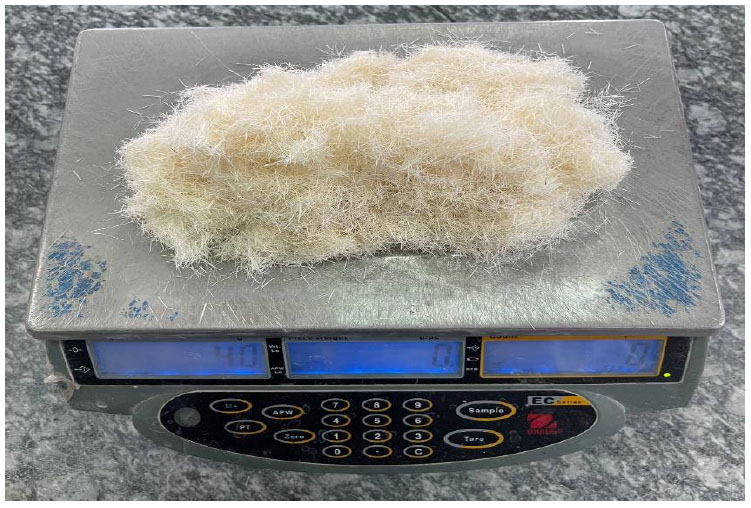
Sisal fibers, as shown in Figure 1 are a natural fiber, mostly creamy white, obtained from the leaves of the Agave sisalana plant. They have a cellulosic content of 72% to 75% and a lignin content of 6% to 8% [14-16]. It is primarily produced in tropical and subtropical regions and widely used in industrial and construction applications for its strength and durability. Sisal fibers used in the study were creamy white and 5mm in length. The sisal fibers were obtained from the local market (Baghdad, Iraq).
The sisal fibers.
2.2. Methods
Table 3 displays the ratios of the materials utilized in the production of the Autoclaved Aerated Concrete (AAC) used in this investigation.
Autoclaved Aerated Concrete (AAC) is made by mixing fine raw materials, including ground sand, cement, lime, and sisal fibers. Water is then added and mixed for 20-30 minutes, followed by adding nano-aluminum. The nano-aluminum powder acts as an aerating agent, reacting with calcium hydroxide formed from the lime in the presence of water. This reaction produces hydrogen gas, which causes the mixture to expand and create fine, evenly distributed air pores within the paste, giving AAC its lightweight and insulating properties. The mixture is poured into molds measuring 20cm by 20cm by 67cm and left for 2-4 hours in chambers at 45-65°C, as shown in Fig. (2).
| Samples | Slurry 64% |
Water 17% |
Cement 13% |
Lime 6% |
Nano Aluminum 0.1% |
Sisal Fiber (0.1%,0.2%, and 0.3% by the Mold Volume) |
|---|---|---|---|---|---|---|
| A | 9 kg | 2.5 L | 2 kg | 1 kg | 1.5 g | 40.2 g |
| B | 9 kg | 2.5 L | 2 kg | 1 kg | 1.5 g | 80.4 g |
| C | 9 kg | 2.5 L | 2 kg | 1 kg | 1.5 g | 120.6 g |
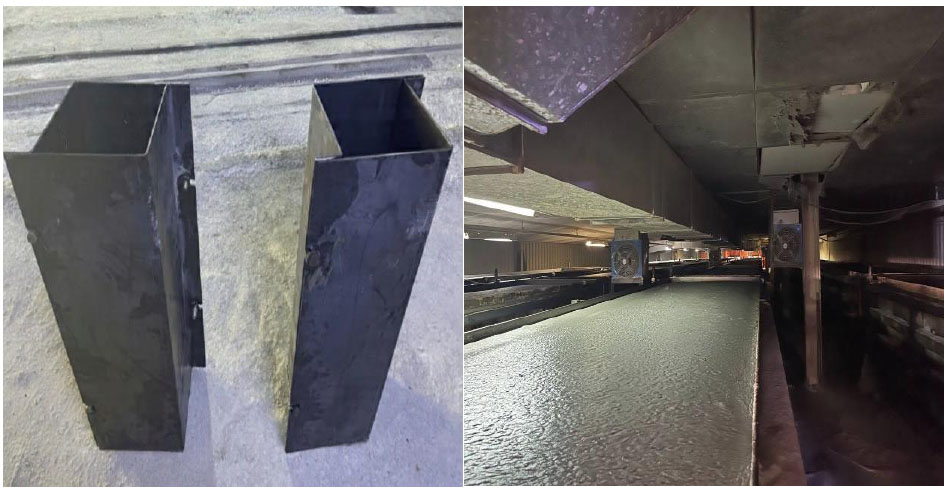
The mold of AAC and the drying room.
Allowing for expansion and initial hardening. During this stage, the mass gains sufficient cohesion and is called the “green cake,” as shown in Fig. (3). The green cake is then transferred to an autoclave, as shown in Fig. (3), where it is cured with saturated steam at 12 bar and 180-200°C.
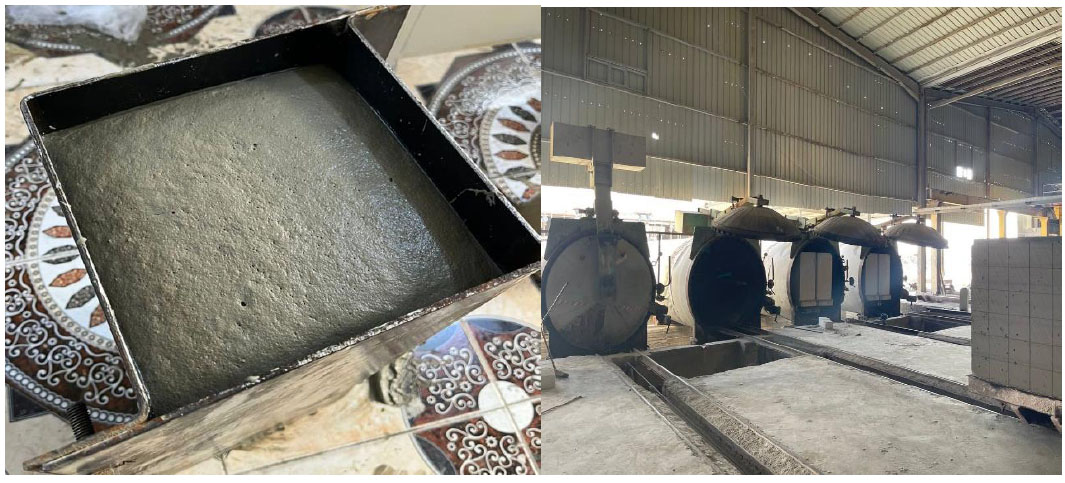
The green cake in the mold and the autoclave of AAC.
This curing process induces advanced chemical reactions between silica and lime, resulting in the formation of tobermorite crystals. These crystals enhance the concrete's strength and volumetric stability. After steam curing, the concrete products are cooled, then cut into cubes (10*10 cm) and prisms (4*4*16 cm) for testing according to the standard specification. The total number of samples is 36 (18 prisms and 18 cubes). Each test has three samples. The samples are then moved to the laboratory for testing. They are characterized by their light weight, good fire resistance, and thermal and acoustic insulation, making them suitable for construction and non-construction use depending on their resistance.
3. RESULTS AND DISCUSSION
3.1. Compressive Strength
The samples passed the (IQS No. 810) [17] compressive strength test. Sisal fiber proportions of 0.1%, 0.2%, and 0.3% of the mold's total volume were used to create three sets of specimens (A, B, and C). Each set consisted of three 10 cm cubes. The cutter is used to cut the cubes from the AAC, and sandpaper is used to smooth the surfaces. The cubes are placed between the plates of the compression strength testing machine, and then the load is applied, as shown in Fig. (4).
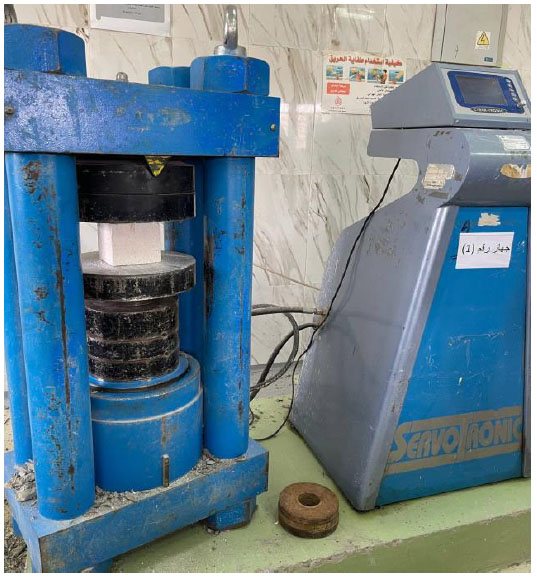
The sample of AAC under the compressive strength test.
The results of the compressive test are shown in the following Fig. (5).
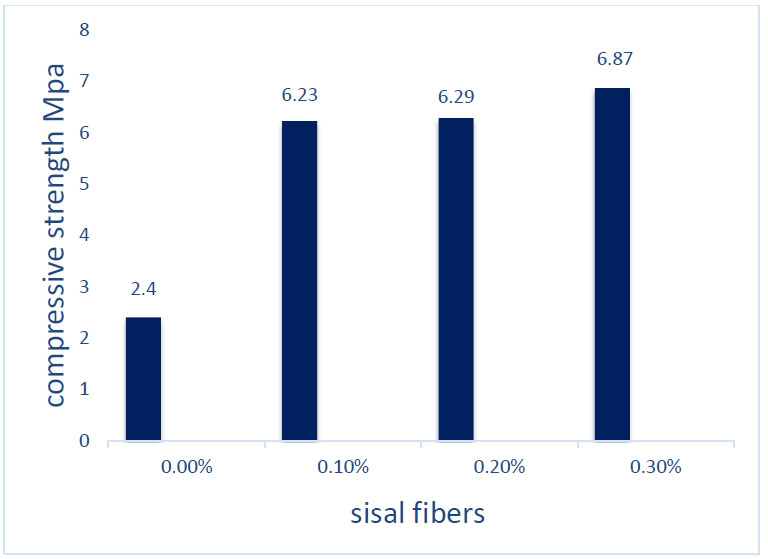
The relationship between sisal fibers and compressive strength.
The unique synergistic effect between Sisal fibers and Aluminum Nanoparticles within the Autoclaved Aerated Concrete (AAC) structure has resulted in significant increases in compressive strength, as seen in Fig. (5). The development and propagation of microcracks is caused by the creation of internal transverse tensile stresses under compressive loading. Nevertheless, since the Sisal fibers are distributed uniformly throughout the AAC matrix, they act as mechanical bridges that limit the propagation and movement of microcracks and prevent them from fusing together and spreading throughout the AAC material. Furthermore, due to increased surface area, the aluminum nanoparticles accelerate hydration reactions that occur during the hydrothermal curing (steam autoclaving) process and enhance the aforementioned phenomenon. This gel promotes the crystallization of tobermorite-type minerals, which are primarily responsible for the AAC's remarkable strength and durability. Additionally, this microstructural evolution improves the Interfacial Transition Zone (ITZ) between Sisal fibers and the AAC matrix and ensures better mechanical interlocking and chemical bonding, which leads to efficient transfer of load from the AAC matrix to the Sisal fibers. The optimum fiber content was determined to be 0.30%; at this fiber content, the fibers disperse evenly without clumping and do not create air voids that will compromise the structural integrity of the AAC material, and it was observed that the greatest compressive strength (6.87 MPa) was obtained at this fiber content. That accepts with [18] when found that the dynamic mechanical properties and strain rate sensitivity of CF-GOMC increase first and then decrease, and the optimal content of CF-GO is 0.3 %.
3.2. Flexural Strength
The test specimens were prepared according to the specification (EN 1961-1997) [19], and they were subjected to the flexural strength test. In the flexural strength experiment, an average of 3 specimens was used; the dimensions of the sample were 40 * 40 * 160 mm, and placed in the flexural strength device as shown in Fig. (6). Then the flexural strength is calculated according to Eq. (1).
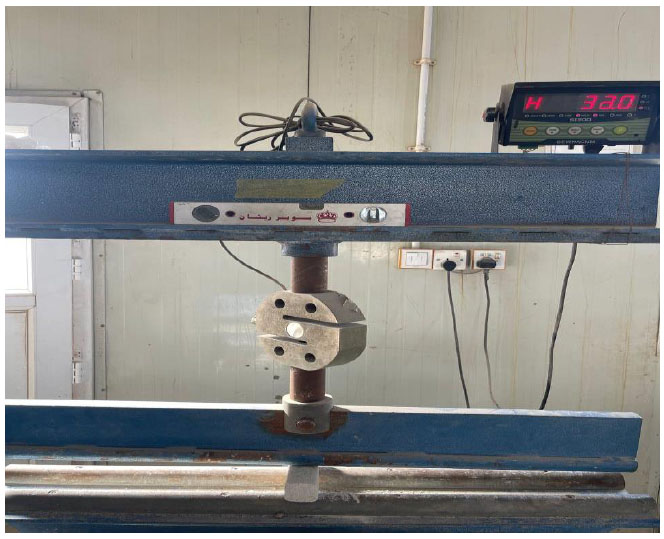
The sample of AAC under the flexural strength test.
 (1)
(1)
Where: Rf= Flexural strength (MPa), Ff =Total maximum applied load (N), I = Distance between supports (mm), and b = Side of square section prism (mm).
The results of the bending resistance test of steam autoclaved concrete reinforced with sisal fibers showed a gradual improvement with increasing fiber content, as the Fig. (7) shown.
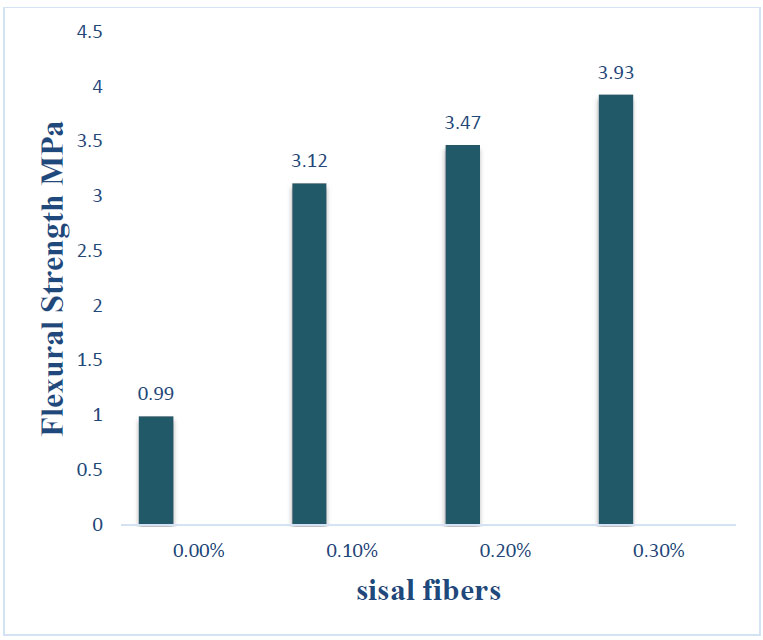
The relationship between flexural strength and sisal fibers.
Reaching a peak value of 0.3%. This is attributed to the synergistic effect of the crack-bridging mechanism provided by the fibers and the role of aluminum nanoparticles in improving the microstructure and reducing pore size, resulting in reduced stress surrounding the pores, enhanced stress transfer, increased flexural strength, and a shift from brittle failure to greater ductility.
3.3. Density
These tests have been done according to the (BS EN 12390-7) [20]. The AAC was cut out to prepare the cubes. Three sets of specimens were prepared. Each set included three 10 cm cubic samples. First, the samples were carefully measured as shown in Fig. (8), and each sample's volume was determined as V. Every sample's mass was noted as M. Lastly, the density was determined using the M/V form.
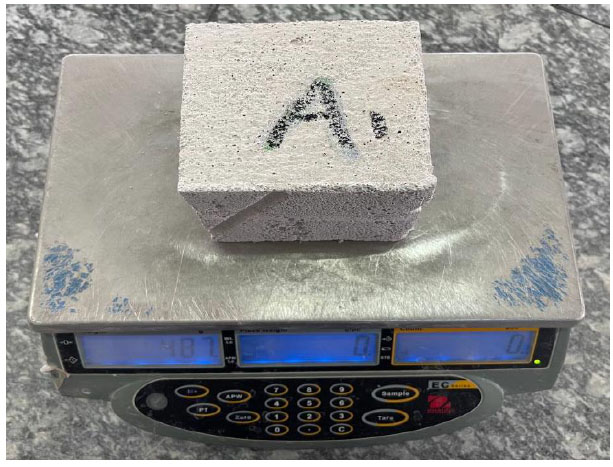
The sample of AAC in the density test.
The results show that the density of Autoclaved Aerated Concrete (AAC) is affected by the percentage of sisal fibers and the presence of aluminum nanoparticles, as the Fig. (9) shown.
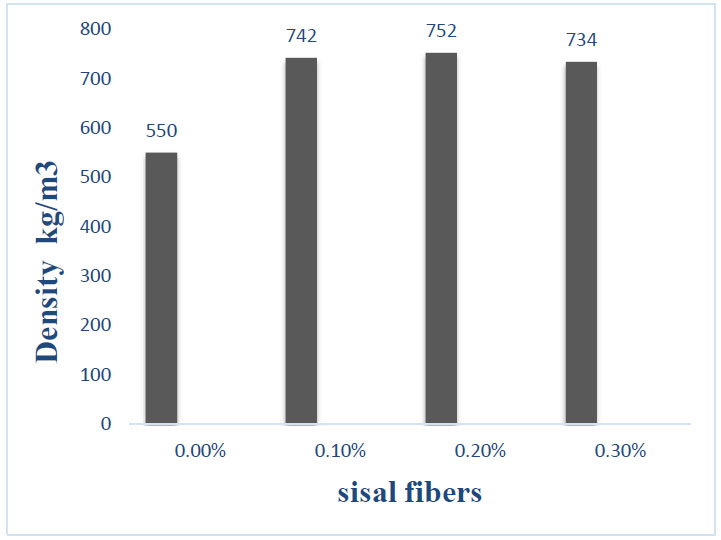
The relationship between sisal fibers and density.
With the addition of 0.1% sisal, a moderate density was observed, as the fibers improve the paste's cohesion without significantly affecting the porous structure. At 0.2% sisal, the density increased to its highest value. This is due to the collapse of some pores and increased paste cohesion. Additionally, the aluminum nanoparticles enhance the reaction and intensify the microstructure. However, when the fiber content was increased to 0.3%, the density decreased. This is explained by the fibers' agglomeration and the difficulty in their uniform distribution, leading to increased air voids and irregular pore size, and consequently, a decrease in density.
3.4. Thermal Conductivity
A thermal conductivity test was conducted to determine the material's ability to conduct heat. The test was conducted using the KD2 PRO as shown in Fig. (10). A prism with dimensions of 160 * 40 *40 mm was used. The test in accordance with (ASTM D5334, 2022) [21].
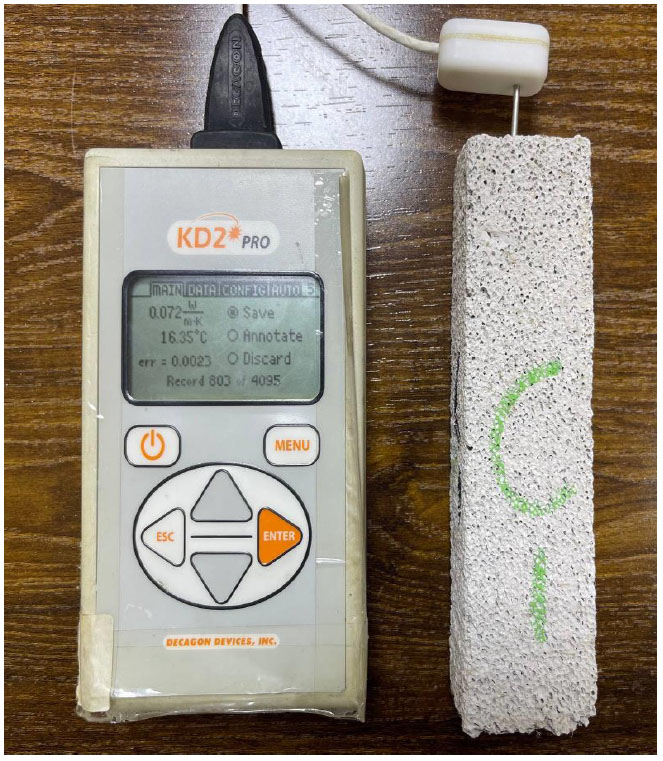
The sample of AAC and the KD2 PRO device.
The results of the thermal conductivity test are shown in Fig. (11).
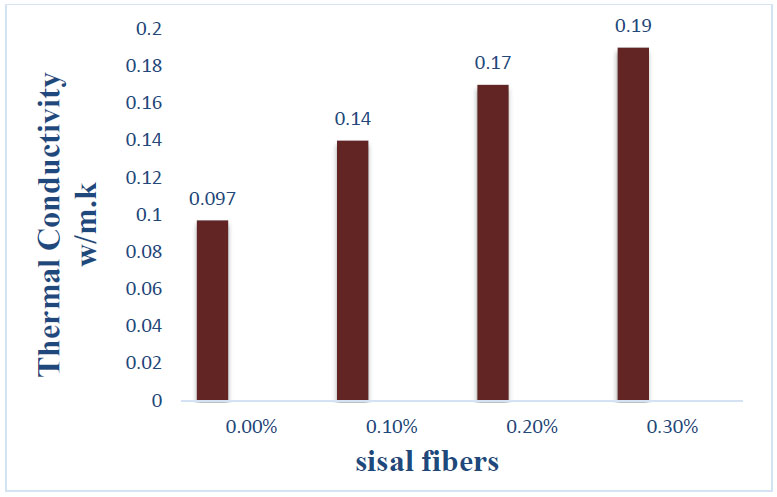
The relationship between thermal conductivity and sisal fibers.
Thermal conductivity tests revealed that increasing the proportion of sisal fibers caused a gradual rise in the thermal conductivity coefficient because of decreased air pore activity and the development of solid thermal pathways within the structure. The addition of aluminum nanoparticles further improved thermal conductivity due to their high conductivity and their ability to enhance micro-density and reduce micro-voids, thereby increasing the continuity.
3.5. Scanning Electron Microscope (SEM)
The Scanning Electron Microscopy (SEM) results shown in Fig. (12) closely align with the observed improvements in the concrete's physical and mechanical properties. The microscopy reveals the formation of a highly cohesive and dense matrix of hydration products (C-S-H), characterized by dense, stable growth of Tobermorite crystals, the fundamental basis for compressive strength in AAC. This structural densification is attributed to the unique behavior of the aluminum nanoparticles; rather than acting as a gas-generating agent, their high reactivity and early consumption led them to fill micropores and reinforce the matrix's gel structure. Furthermore, the micrographs reveal a robust interfacial bond connecting the sisal fibers and micro-filaments to the surrounding cementitious matrix; these embedded fibers act as microscopic reinforcement bridges that restrict crack propagation and effectively distribute stresses, providing conclusive structural evidence of the synergistic effects of nano-nucleation and fiber reinforcement, which together drove a significant leap in the mechanical and physical performance of the developed cementitious composite.
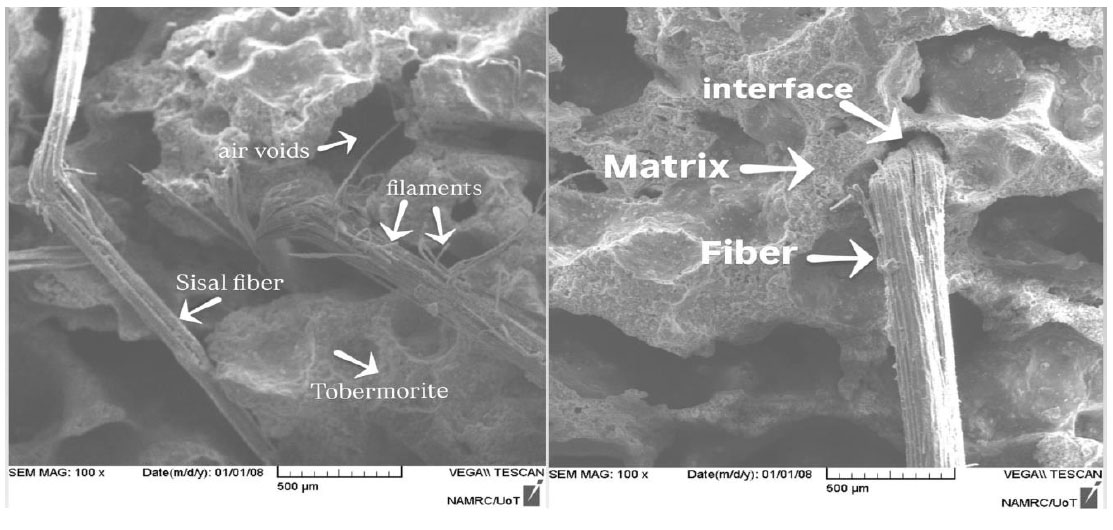
A scanning electron micrograph (SEM) of autoclaved aerated concrete (AAC) containing nano aluminum with sisal fibers.
3.6. X-ray Diffraction (XRD)
The XRD analysis of the autoclaved aerated concrete (AAC), as shown in Fig. (13) indicated that the addition of sisal fibers and aluminum nanoparticles preserved the basic crystalline structure of the cementitious matrix without significantly altering the main crystalline phases that enhance strength, such as quartz and Tobermorite, since the positions of key diffraction peaks remained unchanged before and after the addition. The highly effective catalytic effect of the nano-aluminum, which provides active nucleation sites that accelerate and improve crystal growth and regularity within the microscopic voids, is directly responsible for the noticeable increase in the intensity and sharpness of these crystalline peaks after the modification. The strong bonding between the sisal fibers and the nano-enhanced crystalline matrix helped seal pores and reduce internal defects, which greatly improved the concrete's mechanical and physical properties. This was demonstrated by a noticeable increase in compressive strength and improved overall durability of the cementitious composite that resulted from this successful structural modification. This microstructural evolution had a positive impact on the material's overall properties.
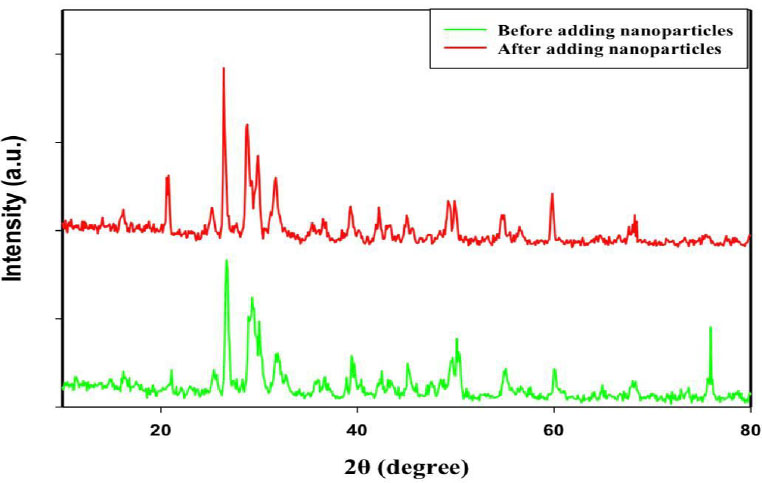
X-ray diffraction of AAC.
4. LIMITATIONS OF THE STUDY
The limitations of the study are as follows:
Only one level of Nano aluminum was evaluated in this study; it was not possible to evaluate the extent to which this study evaluated the effect of varying levels of Nano aluminum on the composition, nor was it possible to conclude the optimum proportion of each material in this study. The investigation was restricted to a particular amount of sisal fibers, as well as only one amount of nanoaluminum; therefore, the results of the current investigation may not be fully applicable to other possible combinations of materials. The microstructural properties were examined using both Scanning Electron Microscopy (SEM) and X-Ray Diffraction (XRD); however, elemental characterization using Energy Dispersive X-Ray Spectroscopy (EDS) could not be performed due to the limitations of the equipment. The current study primarily focused on evaluating the physical and mechanical properties of the materials used in this project, using testing methods performed in a laboratory environment, but evaluating the long-term durability of the material, drying shrinkage behavior and determining the material's performance in both a true environmental setting and under actual service conditions is outside of the scope of the current study, and should be researched in the future.
CONCLUSION
Autoclaved Aerated Concrete (AAC) containing sisal fibers and nano aluminum resulting in improved physical and Mechanical properties. The compressive strength improved to 6.87 MPa compared with 2.4 MPa of 0% sisal fiber and nano-aluminum powder, and the flexural strength increased from 3.12 to 3.93 with an increase in the sisal fiber content. Furthermore, the density was reduced from 752 Kg/m3 to 734 kg/m3; however, it increased compared with 550 kg/m3 of 0% sisal fiber and nano-aluminum powder. The thermal conductivity increased to 0.19 w/m.k compared with 0.098 w/m.k of 0% sisal fiber and nano-aluminum powder. Additionally, the SEM test indicated improvement in physical and mechanical properties. This type of autoclaved aerated concrete can be used in lightweight structural units and low-rise load-bearing walls in residential buildings.
AUTHORS’ CONTRIBUTIONS
The authors confirm their contributions to the paper as follows: A.M.: was responsible for the study conception and design; H.H.: conducted the data collection, performed the analysis and interpretation of the results, and drafted the manuscript. All authors reviewed the results and approved the final version of the manuscript.
LIST OF ABBREVIATIONS
| AAC | = Autoclaved Aerated Concrete |
| MPa | = Mega Pascal |
| M | = Meter |
| Kg | = kilogram |
| C-S-H | = Calcium Silicate Hydrate |
| °C | = Degree Celsius |
| KN | = Kilo Newton |
| Kpa | = Kilopascal |
| w/m.k | = Watt/ Meter kelvin |
| ASTM | = American Society for Testing and Materials |
| I.Q.S | = Iraqi Standard Specification |
| SEM | = Scanning Electron Micrograph |
| EN | = European Norm |
AVAILABILITY OF DATA AND MATERIALS
The data supporting the findings of this study are available from the corresponding author [H.H] upon reasonable request.
ACKNOWLEDGEMENTS
The authors want to express their sincere gratitude and deep appreciation to their supervisor, Prof. Dr. Aqeel Mousa, for his invaluable guidance, continuous support, and scientific insights throughout this research. Special thanks are also extended to the management and technical staff of the Furat Karbala Autoclaved Aerated Concrete (AAC) Plant, Iraq for their cooperation and for providing the necessary materials and facilities to conduct the experimental part of this study. Furthermore, the authors are grateful to the Karbala Construction Laboratory, Iraq for their professional assistance and for providing access to the laboratory equipment required for testing and data collection.